Aug 292014
 
One of the greatest challenges of our time is growing more crops to feed more people, but using less water

Sorghum is one of the most ‘efficient’ crops in terms of needing less water and nutrients to grow. And although it is naturally well-adapted to sun-scorched drylands, there is still a need to improve its yield and broad adaptability in these harsh environments. In West Africa, for example, while sorghum production has doubled in the last 20 years, its yield has remained stagnant – and low.

The GCP Sorghum Research Initiative comprises several projects, which are exploring ways to use molecular-breeding techniques to improve sorghum yields, particularly in drylands. All projects are interdisciplinary international collaborations with an original focus on Mali, where sorghum-growing areas are large and rainfall is getting more erratic and variable. Through the stay-green project, the research has since broadened to also cover Burkina Faso, Ethiopia, Kenya, Niger and Sudan.

Using molecular markers is new and exciting for us as it will speed up the breeding process. With molecular markers, you can easily see if the plant you’ve bred has the desired characteristics without having to grow the plant and or risk missing the trait through visual inspection.”

What’s MARS got to do with it?

Niaba Témé is a local plant breeder and researcher at Mali’s L’Institut d’économie rurale (IER). He grew up in a farming community on the southern edge of the Sahara Desert, where crops would constantly fail during drier-than-normal seasons.
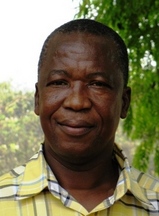
Niaba Teme

Niaba Témé

Niaba says these crop failures were in part his inspiration for a career where he could help farmers like his parents and siblings protect themselves from the risks of drought and extreme temperatures.

For the past four years, Niaba and his team at IER have been collaborating with Jean-François Rami and his team at France’s Centre de coopération internationale en recherche agronomique pour le développement (CIRAD), to improve sorghum grain yield and quality for West African farmers. The work is funded by the Syngenta Foundation for Sustainable Agriculture.

“With the help of CIRAD and Syngenta, we have been learning how to use molecular markers to improve breeding efficiency of sorghum varieties more adapted to the variable environment of Mali and surrounding areas which receive less than 600 millimetres of rainfall per year,” he says.
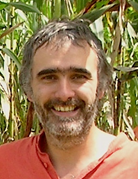
Jean-François Rami

Jean-François Rami

“Using molecular markers is new and exciting for us as it will speed up the breeding process. With molecular markers, you can easily see if the plant you’ve bred has the desired characteristics without having to grow the plant and or risk missing the trait through visual inspection.”

Jean-François Rami, who is the project’s Principal Investigator, has been impressed by the progress made so far. Jean-François is also GCP’s Product Delivery Coordinator for sorghum.

“Since its inception, the project has progressed very well,” says Jean-François. “With the help of the IER team, we’ve been able to develop two bi-parental populations from elite local varieties, targeting two different environments of sorghum cropping areas in Mali. We’ve then been able to use molecular markers through a process called marker-assisted recurrent selection [MARS] to identify and monitor key regions of the genome in consecutive breeding generations.”

The collaboration with Syngenta came from a common perspective and understanding of what approach could be effectively deployed to rapidly deliver varieties with the desired characteristics.

“Syngenta came with their long experience in implementing MARS in maize. They advised on how to execute the programme and avoid critical pitfalls. They offered to us the software they have developed for the analysis of data which allowed the project team to start the programme immediately,” says Jean-François.

Like all GCP projects, capacity building is a large part of the MARS project. Jean-François says GCP has invested a lot to strengthen IER’s infrastructure and train field technicians, researchers and young scientists. But GCP is not the only player in this: “CIRAD has had a long collaboration in sorghum research in Mali and training young scientists has always been part of our mission. We’ve hosted several IER students here in France and we are interacting with our colleagues in Mali either over the phone or travelling to Mali to give technical workshops in molecular breeding. The Integrated Breeding Platform [IBP] has also been a breakthrough for the project, providing to the project team breeding services, data management tools, and a training programme – the Integrated Breeding Multiyear Course [IB–MYC].”

We don’t have these types of molecular-breeding resources available in Mali, so it’s really exciting to be a part of this project… the approach has the potential to halve the time it takes to develop local sorghum varieties with improved yield and adaptability to drought… one of the great successes of the project has been to bring together sorghum research groups in Mali in a common effort to develop new genetic resources for sorghum breeding.”

Back-to-back: more for Mali’s national breeding programme

On the back of the MARS project, Niaba successfully obtained GCP funding in 2010 to carry out similar research with CIRAD and collaborators in Africa at the International Crops Research Institute for the Semi-Arid Tropics (ICRISAT).

“In this project, we are trying to enhance sorghum grain yield and quality for the Sudano-Sahelian zone of West Africa using the backcross nested association mapping (BCNAM) approach,” explains Niaba, who is the Principal Investigator of the BCNAM project. “This involves using an elite recurrent parent that is already adapted to local drought conditions. The benefit of this approach is that it can lead to detecting elite varieties much faster.”
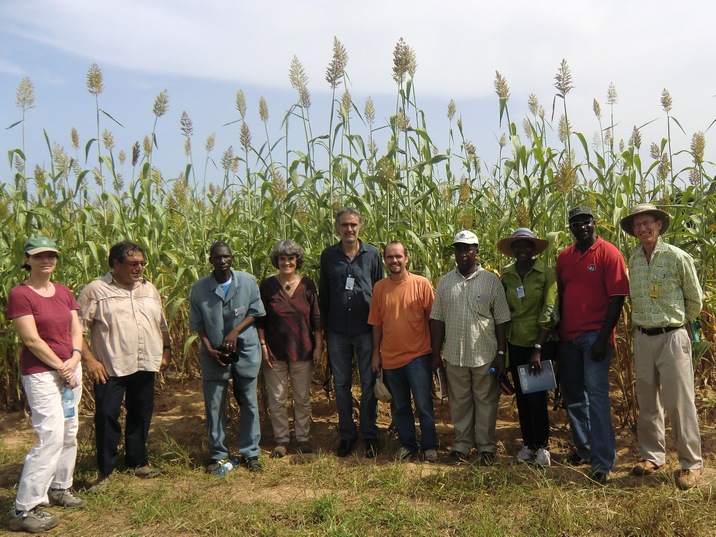
Kirsten Vom Brocke (CIRAD) Michel Vaksmann (CIRAD) Mamoutou Kouressy (IER) Eva Weltzien (ICRISAT) Jean-Francois Rami (CIRAD) Denis Lespinasse (Syngenta) Niaba Teme (IER) Ndeye Ndack Diop (GCP) Ibrahima Sissoko (Icrisat) Fred Rattunde (Icrisat)

A ‘sample’ of the rich mix of international partners in sorghum research: Left to right – Kirsten Vom Brocke (CIRAD), Michel Vaksmann (CIRAD), Mamoutou Kouressy (IER), Eva Weltzien (ICRISAT), Jean-François Rami (CIRAD), Denis Lespinasse (Syngenta), Niaba Teme (IER), Ndeye Ndack Diop (GCP Capacity Building Leader), Ibrahima Sissoko and Fred Rattunde (both from ICRISAT).

Eva Weltzien has been the Principal Scientist for ICRISAT’s sorghum breeding programme in Mali since 1998. She says the project aligned with much of the work her team had been doing, so it made sense to collaborate considering the new range of sorghum genetic diversity that this approach aims to use.

“We’ve been working with Niaba’s team to develop 100 lines for 50 populations from backcrosses carried out with 30 recurrent parents,” explains Eva. “These lines are being genotyped by CIRAD. We will then be able to use molecular markers to determine if any of these lines have the traits we want. We don’t have these types of molecular-breeding resources available in Mali, so it’s really exciting to be a part of this project.”
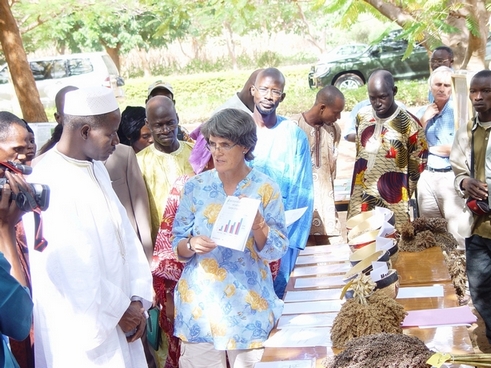
Eva Weltzien (holding sheet of paper) presenting to Mali's Minister of Agriculture (in white cap) a graph on the superiority of new guinea race hybrids. Also on display are panicles and seed of the huybrids and released varieties of sorghum in Mali. The occasion was an annual field day at ICRISAT's research station at Samanko, Mali.

An annual field day at ICRISAT’s research station at Samanko, Mali. Eva Weltzien (holding sheet of paper) showing Mali’s Minister of Agriculture, Tiemoko Sangare, (in white cap) a graph on the superiority of new guinea race hybrids. Also on display are panicles and seed of the hybrids and released varieties of sorghum in Mali.

Eva says that the approach has the potential to halve the time it takes to develop local sorghum varieties with improved yield and adaptability to drought.

For Jean-François, one of the great successes of the project has been to bring together sorghum research groups in Mali in a common effort to develop new genetic resources for sorghum breeding.

“This project has strengthened the IER and ICRISAT partnerships around a common resource. The large multiparent population that has been developed is analysed collectively to decipher the genetic control of important traits for sorghum breeding in Mali,” says Jean-François.

 Plants with this ‘stay-green’ trait keep their leaves and stems green during the grain-filling period. Typically, these plants have stronger stems, higher grain yield and larger grain.”

Sorghum staying green and strong, with less water

In February 2012, Niaba and his colleague, Sidi B Coulibaly, were invited to Australia as part of another Sorghum Research Initiative project they had been collaborating on with CIRAD, Australia’s University of Queensland and the Queensland Department of Agriculture, Fisheries and Forestry (QDAFF).

“We were invited to Australia for training by Andrew Borrell and David Jordan, who are co-Principal Investigators of the GCP stay-green sorghum project,” says Niaba.
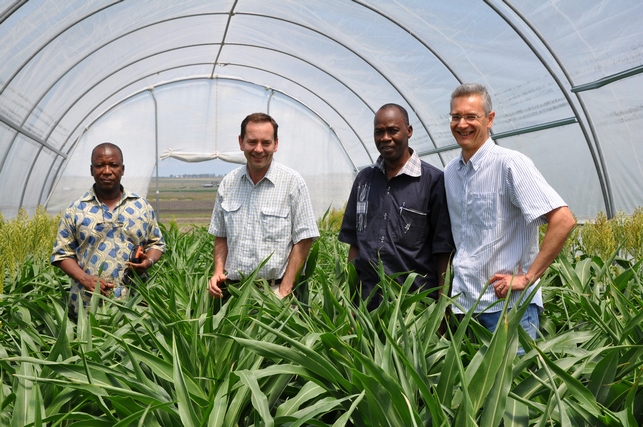
Left to right: Niaba Teme (Mali), David Jordan (Australia), Sidi Coulibaly (Mali) and Andrew Borrell (Australia) visiting an experiment at Hermitage Research Facility in Queensland, Australia.

Left to right: Niaba Témé (Mali), David Jordan (Australia), Sidi Coulibaly (Mali) and Andrew Borrell (Australia) visiting an experiment at Hermitage Research Facility in Queensland, Australia.

“We learnt about association mapping, population genetics and diversity, molecular breeding, crop modelling using climate forecasts, and sorghum physiology, plus a lot more. It was intense but rewarding – more so the fact that we understood the mechanics of these new stay-green crops we were evaluating back in Mali.”
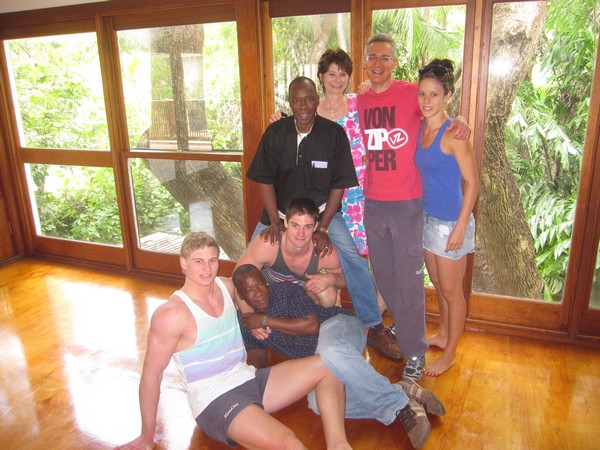
It wasn't all work and there was clearly also time to play, as we can see her., Sidi Coulibaly and Niaba Teme visiting with the Borrell family in Queensland, Australia.

It wasn’t all work and there was clearly also time to play, as we can see here., where Sidi Coulibaly and Niaba Témé are visiting the Borrell family in Queensland, Australia.

Stay-green is a post-flowering drought adaptation trait that has contributed significantly to sorghum yield stability in northeastern Australia and southern USA over the last two decades.

Andrew has been researching how the drought-resistant trait functions for almost 20 years, including gene discovery. In 2010, he and his colleague, David Jordan, successfully obtained funding from GCP to collaborate with IER and CIRAD to develop and evaluate drought-adapted stay-green sorghum germplasm for Africa and Australia.

“Stay-green sorghum grows a canopy that is about 10 per cent smaller than other lines. So it uses less water before flowering,” explains Andrew. “More water is then available during the grain-filling period. Plants with this ‘stay-green’ trait keep their leaves and stems green during the grain-filling period. Typically, these plants have stronger stems, higher grain yield and larger grain.”

Andrew says the project is not about introducing stay-green into African germplasm, but rather, enriching the pre-breeding material in Mali for this drought-adaptive trait.

The project has three objectives:

  1. To evaluate the stay-green drought-resistance mechanism in plant architecture and genetic backgrounds appropriate to Mali.
  2. To develop sorghum germplasm populations enriched for stay-green genes that also carry genes for adaptation to cropping environments in Mali.
  3. To improve the capacity of Malian researchers by carrying out training activities for African sorghum researchers in drought physiology and selection for drought adaptation in sorghum.

…we have found that the stay-green trait can improve yields by up to 30 percent in drought conditions with very little downside during a good year, so we are hoping that these new lines will display similar characteristics”

Expansion and extension:  beyond Mali to the world

Andrew explains that there are two phases to the stay-green project. The project team first focused on Mali. During this phase, the Australian team enriched Malian germplasm with stay-green, developing introgression lines, recombinant inbred lines and hybrids. Some of this material was field-tested by Sidi and his team in Mali.

“In the past, we have found that the stay-green trait can improve yields by up to 30 percent in drought conditions with very little downside during a good year, so we are hoping that these new lines will display similar characteristics,” says Andrew. “During the second phase we are also collaborating with ICRISAT in India and now expanding to five other African countries – Niger and Burkina Faso in West Africa; and Kenya, Sudan and Ethiopia in East Africa. During 2013, we grew our stay-green enriched germplasm at two sites in all these countries. We also hosted scientists from Burkina Faso, Sudan and Kenya to undertake training in Queensland in February 2014.”
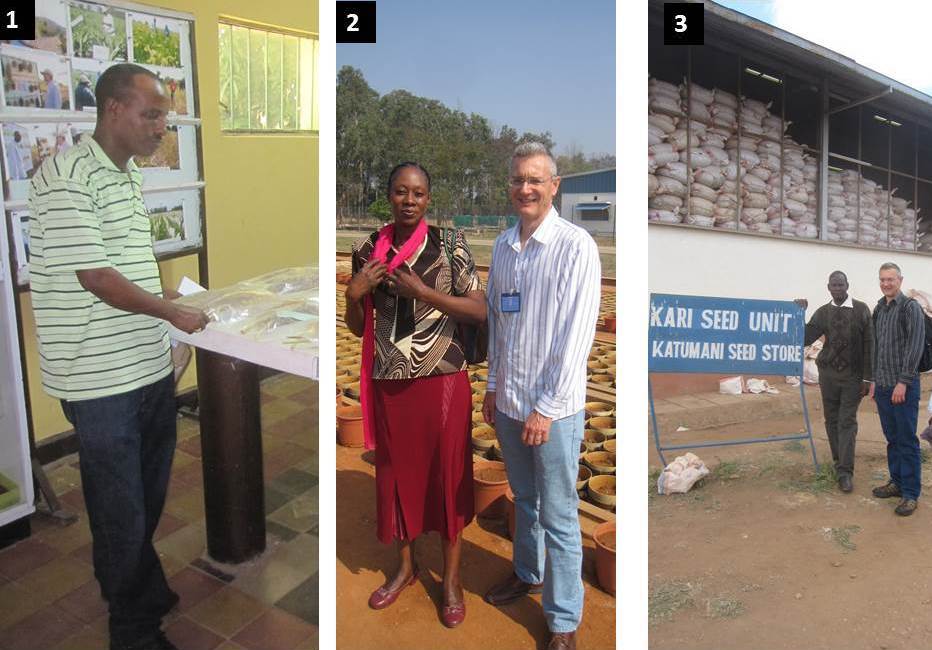
 

A sampling of some of stay-green sorghum partnerships in Africa. (1)  Asfaw Adugna assessing the genetic diversity of  sorghum panicles produced from the GCP collaboration at Melkassa, Ethiopia. (2)  Clarisse Barro-Kondombo (Burkina Faso) and Andrew Borrell (Australia) visiting a lysimeter facility in Hyderabad, India, as part of GCP training. (3) Clement Kamau (Kenya, left) and  Andrew Borrell (Australia, right) visiting the seed store at the Kenya Agricultural Research Institute (KARI) in Katumani, Kenya.

A sampling of some of stay-green sorghum partnerships in Africa. (1) Asfaw Adugna of the Ethiopian Institute of Agricultural Research (EIAR)  assessing the genetic diversity of sorghum panicles produced from the GCP collaboration at Melkassa, Ethiopia. (2) Clarisse Barro-Kondombo (left, INERA – Institut de l’environnement et de recherches agricoles , Burkina Faso) and Andrew Borrell (right) visiting a lysimetre facility at ICRISAT’s headquarters in Hyderabad, India, as part of GCP training, in February 2013. (3) Clement Kamau (left, Kenya Agricultural Research Institute [KARI] ) and Andrew Borrell (right) visiting the seed store at KARI, Katumani, Kenya.

Andrew says that the collaboration with international researchers has given them a better understanding of how stay-green works in different genetic backgrounds and in different environments, and the applicability is broad. Using these trial data will help provide farmers with better information on growing sorghum, not just in Africa and Australia, but also all over the world.

“Both David and I consider it a privilege to work in this area with these international institutes. We love our science and we are really passionate to make a difference in the world with the science we are doing. GCP gives us the opportunity to expand on what we do in Australia and to have much more of a global impact.”

We’ll likely be hearing more from Andrew on the future of this work at GCP’s General Research Meeting (GRM) in October this year, so watch this space! Meantime, see slides below from GRM 2013 by the Sorghum Research Initiative team. We also invite you to visit the links below the slides for more information.

Links

Aug 292014
 

“…I wanted to contribute in a similar way” – Eva Weltzien


Eva Weltzien

Eva Weltzien

Learning about the work of Nobel laureate, Norman Borlaug, in high school inspired Eva Weltzien to become a plant breeder so she too could contribute to improving the living conditions in the developing world. Today, Eva is a Principal Scientist in sorghum breeding and genetic resources at the International Crops Research Institute for the Semi-Arid Tropics (ICRISAT) in Mali.

“Not only did Norman Borlaug revolutionise agriculture by breeding high-yielding wheat varieties, he then selflessly distributed these to the countries in the world that most needed them, saving hundreds of millions from starvation,” Eva recollects passionately, as she speaks about her scientific hero. “I remember being inspired when he won his Nobel Prize in 1970, mainly for the fact that agricultural research was actually being seen as contributing to world peace,” says Eva. “I knew then that I wanted to contribute in a similar way.”

I…wanted to take a break from… theory and instead gain an appreciation for plant breeding by working in the field”

The path to plant breeding, and pearls along the way
Eva was raised in her native Germany, as well as in Beirut, Lebanon, where she spent six years when her parents were stationed at the local university there. She credits her parents; both plant pathologists, for instilling in her a scientific mind-set from a tender age.

“They taught me to think outside the box and apply my knowledge and understanding to how I made sense of the world,” Eva recalls. “Being plant pathologists, they also encouraged me to observe the environment carefully and treat the earth with respect.”

Upon graduating from high school, Eva deferred going to university and instead worked as a seed technician for a private company in Germany. “I just wanted to take a break from studying theory and instead gain an appreciation for plant breeding by working in the field,” says Eva.

After one year with the company, Eva was ready to start university. During the decade that followed, she completed a Diploma in Agricultural Biology (University of Hohenheim, 1981) and a PhD in Agriculture (Munich University, 1986).

A year after completing her PhD, Eva accepted a postdoc position at Iowa State University, USA, where she met her future husband Fred Rattunde. After a few years, both Eva and Fred moved to India to work with ICRISAT. “I’ve been working for ICRISAT for almost 27 years now,” says Eva. “When I first started, I was working in pearl millet breeding.”

The key challenges have been improving the infrastructure of the national research facilities… as well as increasing the technical training for local researchers…this has slowly improved, particularly in the last four years with the funding and help through the GCP Sorghum Research Initiative.…we can see our work making an impact on people’s lives…”

Off to Africa, and bearing fruit
In 1998, ICRISAT offered Eva and Fred positions in Mali where they would take responsibility for the Institute’s sorghum-breeding programme in West Africa.

OLYMPUS DIGITAL CAMERA

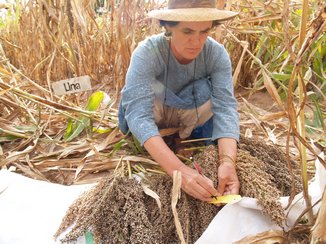
Evaluating Eva: In Dioila district, Mali, evaluating the panicles of a new sorghum line after harvest.

“It was a great challenge that we both wanted to explore,” says Eva. “The key challenges have been improving the infrastructure of the national research facilities to do the research as well as increasing the technical training for local agronomists and researchers. Over the past 15 years, this has slowly improved, particularly in the last four years, with the funding and facilitation through the GCP Sorghum Research Initiative. Now we can see our work making an impact on people’s lives in West Africa.” (see GCP’s work on infrastructure improvement)

…we are closer to delivering more robust sorghum varieties which will help farmers and feed the ever-growing population in West Africa.”

Improving drought tolerance in sorghum for Africa
The second phase of GCP’s Sorghum Research Initiative focuses on Mali, where sorghum-growing areas are large, and distributed over a wide range of rainfall regimes.

Eva and her team are currently collaborating with local researchers at L’Institut d’économie rurale (IER), Mali and France’s Centre de coopération internationale en recherche agronomique pour le développement (CIRAD) on a project to test a novel molecular-breeding approach – backcross nested association mapping (BCNAM). Eva says the approach has the potential to halve the time it takes to develop local sorghum varieties with improved yield and adaptability to poor soil fertility conditions.

“We don’t have these type of molecular-breeding resources available in Mali, so it’s really exciting to be a part of this project.”  Still, Eva and her colleagues continue to press forwards in this new frontier in plant science, making good advances in another parallel but closely related project that Eva leads in the GCP Comparative Genomics Research Initiative.

Eva continues, “We’ve had good results in terms of field trials, despite the political situation. Overall, we feel the experience is enhancing our capacity here in Mali, and that we are closer to delivering more robust sorghum varieties which will help farmers and feed the ever-growing population in West Africa.”

Slides (with more links after the slides)

Links

Aug 272014
 
Leon Kochian

Leon Kochian

“By being involved with GCP, I’ve had more opportunities to travel to the developing world and witness the problems that local farmers in these countries are facing, as well as to meet with the local researchers who are trying to overcome these problems. It has made me appreciate that these  researchers also need the capacity to sustainably deal with agricultural problems once the project money starts to dry up.” – Leon Kochian (pictured), Professor, Cornell University, USA; and Director of Robert W Holley Center for Agriculture and Health, United States Department of Agriculture – Agricultural Research Service. Also Product Delivery Leader for GCP’s Comparative Genomics Research Initiative.

Bright and early beginnings in biology
For as long as Leon Kochian can remember, he’d always wanted to be a biologist.

“I remember my second-grade teacher reading a story to us about the white cliffs of Dover and thinking to myself ‘They’re white because they’re covered in the prehistoric remains of dead protozoan’,”’ says Leon with a chuckle. “Yes, I was a weird kid and that sort of stuff [biology] has always interested me.”

Having completed a Bachelor’s Degree in Botany at the University of California, Berkeley, and a PhD in Plant Physiology at the University of California, Davis (both in USA), Leon joined the United States Department of Agriculture based at Cornell University.

For 30 years, he has combined lecturing and supervising duties at Cornell, with his quest to understand the genetic and physiological mechanisms that allow some cereals to tolerate acidic soils.
The GCP model has always attracted me, particularly its focus on making an impact on farmers’ lives… I had already been a successful researcher having published more than 250 papers, but I felt little of that had made any real impact on the world.”

Identifying genes and breeding tolerant crops for African farmers
Leon and Cornell University have been involved with GCP since the Programme’s inception in 2004, playing a lead role in GCP’s Comparative Genomics Research Initiative, of which Leon is the Product Delivery Coordinator. Cornell University is a member of the GCP Consortium, with Leon as Cornell’s representative in the GCP Consortium Committee.

“The GCP model has always attracted me, particularly its focus on making an impact on farmers’ lives,” says Leon, who has been a Principal Investigator for several Comparative Genomics Research Initiative projects. “I had already been a successful researcher having published more than 250 papers, but I felt little of that had made any real impact on the world.”

During the first phase of the project, Leon led a team comprising of researchers from Cornell, EMBRAPA in Brazil and Moi University in Kenya.

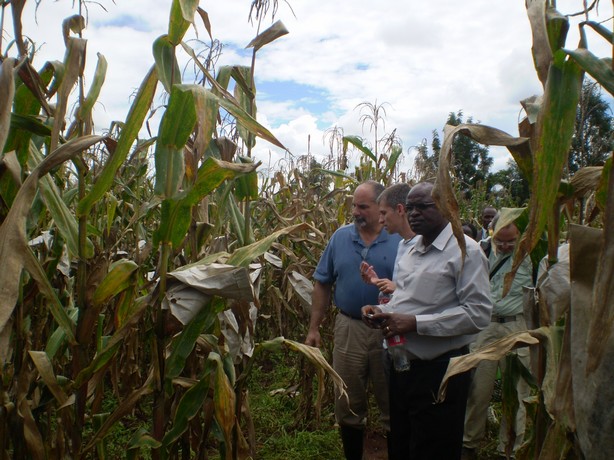
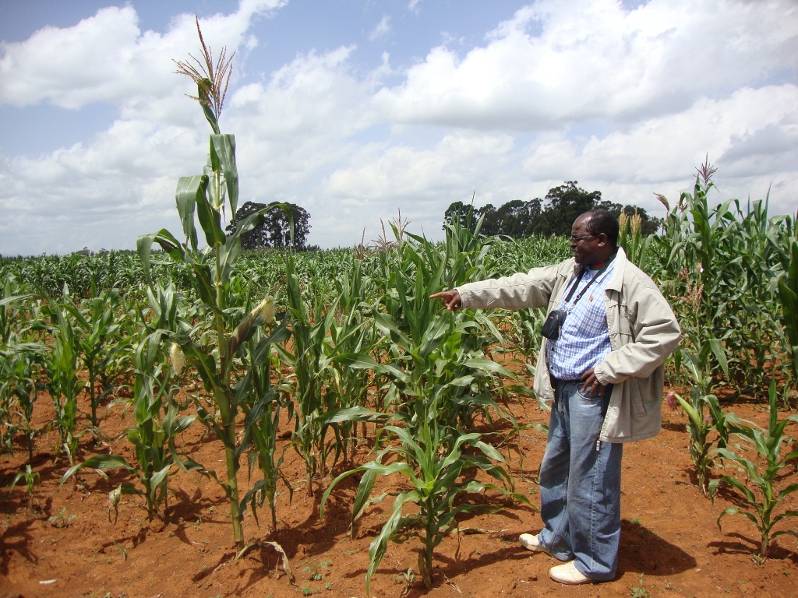
In the foreground, left to right, Leon, Jura and Sam in a maize field in Kenya.

Leon (left) with project colleagues, Jurandir Magalhães (EMBRAPA) and Sam Gudu (Moi University) in a maize field in Kenya in May 2010.

“We had been working for many years with both EMBRAPA and Moi University to identify the genes associated with aluminium tolerance in sorghum and maize and saw the potential to apply our research and expand it to explore other cereals such as rice and wheat,” explains Leon.

During GCP Phase I (2004–2008), the team successfully identified and cloned the major sorghum aluminium tolerance gene (AltSB). In Phase II (2009–2014), they are working towards breeding aluminium-tolerant sorghum lines for sub-Saharan Africa as well as applying what they have learnt to discover similar genes in rice and maize.

“Aluminium toxicity is a problem all over the world, but more so in Africa, as most farmers don’t have the money to manage it,” says Leon “These new aluminium-tolerant crops will improve African farmers’ yields, and, in turn, improve their quality of life.”

It’s like match.com for collaborative research and will hopefully foster greater collaboration between the two continents.”

Insights, connections and matchmaking
According to Leon, the funding from GCP has been very beneficial in making significant research progress on the projects he’s been involved with so far, and he is also quick to note the unexpected and very welcome non-monetary benefits from being involved with GCP.

“By being involved with GCP, I’ve had more opportunities to travel to the developing world and witness the problems that local farmers in these countries are facing, as well as to meet with the local researchers who are trying to overcome these problems. It has made me appreciate that these  researchers also need the capacity to sustainably deal with agricultural problems once the project money starts to dry up.”

Working with GCP, Leon has designed and run workshops to train African scientists on molecular breeding techniques and hosted several postgraduate researchers at Cornell. He is now working with GCP collaborators to develop a database that will help African scientists find potential collaborators in USA and the rest of the Americas. “It’s like match.com for collaborative research and will hopefully foster greater collaboration between the two continents,” says Leon.

Research is such a fun and social experience! … I still love getting into the lab and discovering new things. I’ve also learnt to enjoy being the old guy in the lab!”

Growing greyer, growing wiser
Leon says his passion for biology and research is steadfast and has not waned through the years. Although he doesn’t get to do much of the hands-on work these days, it still remains the most enjoyable part of his job. “Research is such a fun and social experience! I still love getting into the lab and discovering new things. I’ve also learnt to enjoy being the old guy in the lab! Just watching and helping young researchers grow and develop their skills is really rewarding. Each of the 13 PhD students I’ve supervised is like one of my kids and I still keep in touch with all of them, as I do with my own PhD supervisor, 30 years on!”

Having recently celebrated his 60th birthday, Leon has no plans on slowing down anytime soon. “I’m currently Director of the Robert W Holley Center for Agriculture and Health, lecturing undergraduate and postgraduate students, supervising two PhD students and sitting on several boards, all the while trying to find time to write papers and do some research. It’s hard work but I enjoy it.”

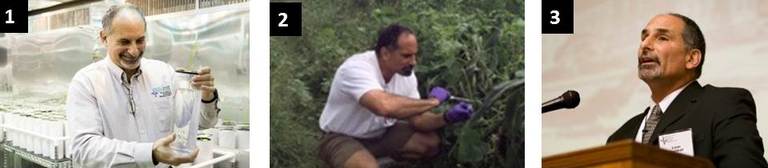
The three faces of Leon: (1) in the lab in Cornell; (2) in the field courtesy of USDA-ARS; and, (3) delivering opening remarks as Director of the Robert W Holley Center

The three faces of Leon: (1) in the lab in Cornell; (2) in the field, courtesy of USDA–ARS; and, (3) delivering opening remarks as Director of the Robert W Holley Center.

Leon tries to impart this philosophy to his students, believing scientists need to enjoy what they are doing, work hard at it, be flexible and creative, and, most importantly, not have ‘fear of failure’. “I don’t care how smart you are. If you’re not willing to work really hard and learn to improve yourself, then you’re not going to succeed.”

With regard to his GCP projects soon coming to a close when GCP sunsets in December 2014, Leon hopes he and team will succeed in meeting all their goals, but even if they don’t, he’s sure they’ll continue the research and try to discover more about aluminium tolerance. More power to them!

Leon’s slides, with links to more supplementary material after the slides

Links

Aug 152014


Samuel Gudu

Samuel Gudu

Having funding to support PhD students and provide them with the resources they need to complete their research is very fulfilling and will go a long way to enhance the long-term success of our goal: to provide Kenyan farmers with cereal varieties that will improve their yields and make their livelihood more secure and sustainable.” – Samuel Gudu, Professor and Deputy Vice-Chancellor (Planning & Development) at Moi University, and now Principal, Rongo University College: a Constituent College of Moi University, Kenya.

Growing up, and getting dirty
Learner, teacher and leader. Sam Gudu has been all these, but this doesn’t mean he doesn’t like to get his hands dirty.

Growing up in a small fishing village on the banks of Lake Victoria, in Western Kenya, Sam was always helping his parents to fish and garden, or his grandparents to muster cattle.

“I remember spending long hours before and after school either on the lake or in the field helping to catch, harvest and produce enough food to eat and support our family,” reminisces Sam.

He attributes this “hard and honest” work to why he still enjoys being in the field.

“Even though I now spend most of my days doing administration work, I’m always trying to get out into the field to get my hands dirty and see how our research is helping to make the lives of Kenyan farmers a lot more profitable and sustainable,” he says.

Sam in a maize field in Kenya.

Doing what he likes to do best: Sam in a maize field in Kenya.

I was… captivated by the study of genetics as it focused on what controlled life.”

Taking control: bonded to genetics, at home and away
Sam says his love for the land transferred to an interest and then passion in the classroom during high school. “I became very interested in Biology as I wanted to know how nature worked,” says Sam. “I was particularly captivated by the study of genetics as it focused on what controlled life.”

This interest grew during his undergraduate years at the University of Nairobi where he completed a Bachelor of Science in Agriculture and a Master’s of Science in Agriculture, focusing on genetics and plant breeding.

“I fondly remember a lecturer during my master’s degree studies who would continually give us challenges to test in the field and in the lab. If you had a viable idea he supported you to design an experiment to test your theory. I like to use the same method in teaching my students. I discuss quite a lot with my students and I encourage them to disagree if they use scientific process.”

Driven by an ever-growing passion and enthusiasm, Sam secured a scholarship to travel to Canada to undertake a PhD in Plant Genetics and Biotechnology at the University of Guelph.

[There has been an] influx of young Kenyans who are choosing degrees in science. The Kenyan Government has recently increased its funding for science and research…”

Nurturing the next breed of geneticists
After graduating from Guelph in 1993, Sam returned to Kenya to lecture at Moi University where he initiated and helped expand teaching and research in the disciplines of Genetic Engineering, Biotechnology and Molecular Biology.

In the past two decades, he has recruited young talented graduates in genetics and helped acquire advanced laboratory equipment that has enabled practical teaching and research in molecular biology.

“I wouldn’t be where I am now were it not for all the assistance I received from my teachers, lecturers and supervisors; notably my PhD supervisor – Prof Ken Kasha of the University of Guelph. So I’ve always tried my best to give the same assistance to my students. It’s been hard work but very rewarding, especially when you see your students graduate to become peers and colleagues.” (Meet some of Sam’s students)

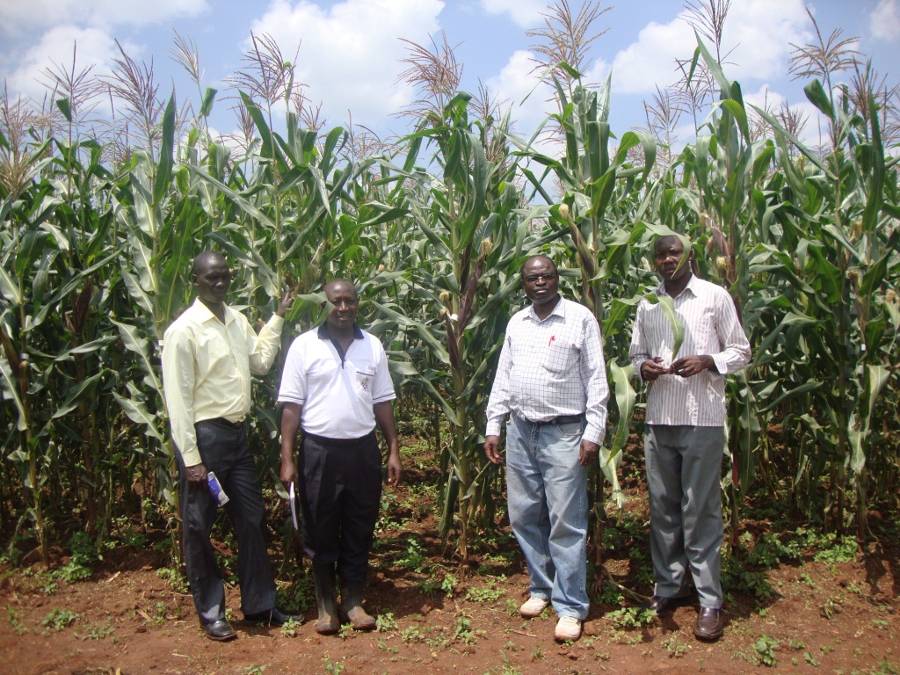
Sam (2nd right), with some of his young charges: Thomas Matonyei (far left) , Edward Saina (2nd left) and Evans Ouma (far right)

Sam (2nd right), with some of his young charges: Thomas Matonyei (far left), Edward Saina (2nd left) and Evans Ouma (far right).

Sam is particularly buoyed by the influx of young Kenyans who are choosing degrees in science.

“The Kenyan Government has recently increased its funding for science and research to two percent of GDP,” explains Sam. “This has not only helped us compete in the world of research but has helped raise the profile of science as a career.”

Knowing which genes are responsible for aluminium tolerance will allow us to more precisely select for aluminium tolerance in our breeding programmes, reducing the time it takes for us to breed varieties that will have improved yields in acidic soils without the use of costly inputs such as lime or fertiliser.” (See the work that Sam does in this area with other partners outside Kenya)

So far we have produced 10 inbred lines that are outstanding for phosphorus efficiency, and two that were outstanding for aluminium toxicity. We are now testing unique verities developed for acid soils of Kenya.”

Slashing costs, increasing yields and resilience: genes to the rescue
Currently, Sam and his team of young researchers at Moi University are working with several other research facilities around the world (Brazilian Agricultural Research Corporation, EMBRAPA; Cornell University, USA; the International Rice Research Institute (IRRI); Japan’s International Research Center for Agricultural Sciences, JIRCAS; and the Kenya Agricultural Research Institute, KARI–Kitale) to develop high-yielding maize varieties adapted to acid soils in East Africa, using molecular and conventional breeding approaches.

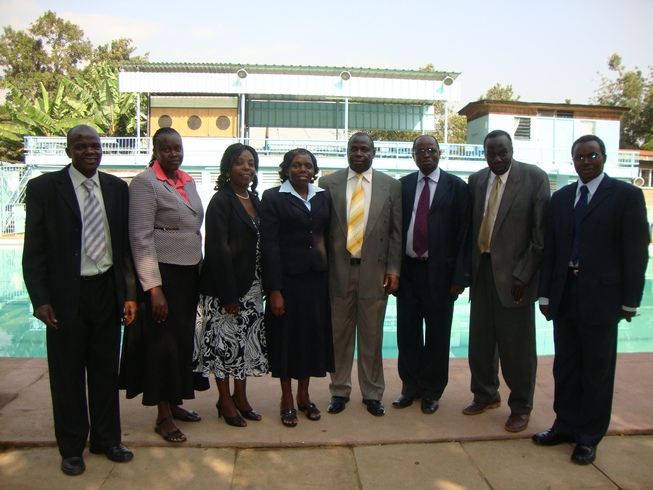
Can you spot Sam? It’s a dual life. Here, he sheds his field clothes in this 2011 suit-and-tie moment with Moi University and other colleagues involved in the projects he leads. Left to right: P Kisinyo, J Agalo, V Mugalavai, B Were, D Ligeyo, S Gudu, R Okalebo and A Onkware.

Acid soils cover almost 13 per cent of arable land in Kenya, and most of the maize-growing areas in Kenya. In most of these areas, maize yields are reduced by almost 60 per cent. Aluminium toxicity is partly responsible for the low and declining yields.

“We found that most local maize varieties and landraces grown in acid soils are sensitive to aluminium toxicity. The aluminium reduces root growth and as such the plant cannot efficiently tap into native soil phosphorus, or even added phosphorus fertiliser. However, there are some varieties of maize that are suited to the conditions even if you don’t use lime to improve the soil’s pH. So far we have produced 10 inbred lines that are outstanding for phosphorus efficiency, and two that were outstanding for aluminium toxicity. We are now testing unique varieties developed for acid soils of Kenya.”

Sam (left)   a group of farmers and alking to farmers and researchers at Sega, Western Kenya, in June 2009

Sam (left) addressing a mixed group of farmers and researchers at Sega, Western Kenya, in June 2009.

In a related project, Sam is working with the same partners to understand the molecular and genetic basis for aluminium tolerance.

“Knowing which genes are responsible for aluminium tolerance will allow us to more precisely select for aluminium tolerance in our breeding programmes, reducing the time it takes for us to breed varieties that will have improved yields in acidic soils without the use of costly inputs such as lime or fertiliser.”

 … my greatest achievements thus far have been those which have benefited farmers and my students.”

 Summing up success
For Sam, the greatest two successes in his career have not been personal.

“If I’m honest, I have to say my greatest achievements thus far have been those which have benefited farmers and my students. Having funding to support PhD students and provide them with the resources they need to complete their research is very fulfilling and will go a long way to enhance the long-term success of our goal: to provide Kenyan farmers with cereal varieties that will improve their yields and make their livelihoods more secure and sustainable.”

With a dozen aluminium-tolerant and phosphorus-efficient breeding lines under their belt already, and two lines submitted for National Variety Trials (a pre-requisite step to registration and release to farmers), Sam and his team seem well on their way towards their goal, and we wish them well in their quest and labour.

Links:


Jul 242014
 

Read how this cocktail blends in a comparative genomics crucible, where both family genes and crop genes come into play in Brazil. Nothing whatsoever to do with the World Cup. It’s all about a passionate love affair with plant science – specifically a quest for aluminium-resilient maize – spanning a decade-and-a-half, and still counting…

Claudia

Claudia Guimarães


“I love the whole process of science; from identifying a problem, developing a method, conducting the experiments, analysing the data and evaluating the findings.” – Claudia Guimarães (pictured), Researcher at EMBRAPA Milho e Sorgo, Sete Lagoas, Brazil

I always enjoyed looking after the cattle and horses as well as planting and harvesting different crops.”

Forged on family farm, federal institute and foreign land
Claudia Guimarães is a plant molecular geneticist, with a pronounced passion for science. At the Federal University of Viçosa, Claudia studied agronomy because it provided a wide range of possibilities career-wise. She also believes her family’s farming background too had a part to play in her study and career choice. “My father has a farm in a small village 200 km north of Sete Lagoas. My whole family used to go there during our school holidays. I always enjoyed looking after the cattle and horses as well as planting and harvesting different crops.”

During her bachelor’s degrees, Claudia was increasingly drawn to plant genetics. She decided to pursue this field further and completed a Master’s degree in Genetics and Breeding, focusing on maize. She then completed a PhD in Comparative Genomics where she split her time between California and Brazil. “For my PhD, I got a scholarship from the Brazilian Council for Scientific and Technological Development which included international training in San Diego, California. During my PhD, I focused on comparative genomics for sugarcane, maize and sorghum, which involved genetic mapping and markers,” Claudia reveals.

Returning to Brazil after two years in California, Claudia joined the Brazilian Agricultural Research Corporation, commonly referred to as EMBRAPA (Empresa Brasileira de Pesquisa Agropecuária), where she has worked for the last 15 years, since 1999.

bCIMMYTmaizeField_w

Preparing to put her shoulder to the wheel, literally? Claudia in a maize field at the International Maize and Wheat Improvement Center (CIMMYT), Tlaltizapan, Mexico, in January 2010.

dNutrientSolutionEmbrapa_w

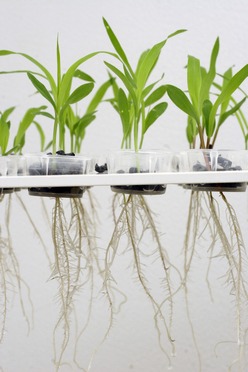
Maize plantlets cultivated in nutrient solution, the methodology Claudia and her team use to evaluate aluminium tolerance.

Our next challenge is to develop specific markers for a wider marker-assisted selection of aluminium tolerance in maize.”

Long-term allies in aluminium tolerance
EMBRAPA first became involved with GCP through one of its foundation programmes headed by Leon Kochian and his former PhD student Jurandir Magalhães. “Jura has been a really close friend for a long time,” explains Claudia. “We went to university together and have ended up working together here at EMBRAPA. I was involved in Jura’s project, which sought to clone a sorghum aluminium-tolerance gene.”

This gene is called SbMATE. Claudia continues, “EMBRAPA had a long-term aluminium-tolerance programme on maize and sorghum, within which there was a QTL mapping project for aluminium tolerance in maize, in which we started to look for a similar gene as the sorghum team.”

[Editor’s note: QTL stands for quantitative trait locus or loci – gene loci where allelic variation is associated with variation in a quantitative trait. An allele is a variant (different version) of a gene, that leads to variation in a trait, eg different colour for hair and eyes in human beings.]

Working with Leon Kochian at Cornell University, USA, Claudia and her team were able to find an important aluminium-tolerance gene homologue (loosely meaning a relative or counterpart) to the sorghum SbMATE, which they named ZmMATE. This gene is responsible for a major aluminium tolerance QTL that improves yield in acidic soil in maize breeding lines and hybrids. (see why scientists work jointly on closely related cereals)

“Identifying and then validating ZmMATE as the primary aluminium tolerance QTL in maize was a great project,” says Claudia. “Our next challenge is to develop specific markers for a wider marker-assisted selection of aluminium tolerance in maize.”

1: Rhyzobox containing two layers of Cerrado soil – a corrected top-soil and lower soils with 15 percent of aluminium saturation. We can see that near-isogenic lines (NILs) introgressed with the Al tolerance QTL (qALT6) that encompasses ZmMATE1 show deeper roots and longer secondary roots in acid soils, whereas the roots of L53 are mainly confined in the corrected top soil.  2: Maize ears, representing the improved yield stability in acid soils of a NIL per se and crossed with L3. NILs have the genetic background of L53 introgressed with qALT6, the major aluminium-tolerance QTL.

March 2014. Photo 1: Rhyzobox containing two layers of Cerrado soil – a corrected top-soil and lower soils with 15 percent aluminium saturation. We can see that near-isogenic lines (NILs) introgressed with the aluminium-tolerance QTL (qALT6) that encompasses ZmMATE1 show deeper roots and longer secondary roots in acidic soils, whereas the roots of L53 are mainly confined in the corrected top soil. Photo 2: Maize ears, representing the improved yield stability in acidic soils of a NIL per se and crossed with L3. NILs have the genetic background of L53 introgressed with qALT6, the major aluminium-tolerance QTL.


 …the students have really become my arms…  helping me a lot with the experiments…

Giving and receiving: students step in, partners in print
Supervising students has become a larger part of Claudia’s life since becoming a member of the Genetics Graduate Programme at Universidade Federal de Minas Gerais, in 2004. Because of this, she credits the students for helping her with her research. “I don’t have as much time as I used to in the lab, so the students have really become my arms in that area, helping me a lot with the experiments,” Claudia reveals. “This isn’t to say that they don’t have to think about what they are doing. I encourage them to always be thinking about why they are doing an experiment and what the result means. At the end of the day, they need to know more about what they are doing than I do, so they can identify indiscretions and successes.”

Claudia says she is always preaching three simple instructions to her students – work hard, always continue to learn and like what you do. “The last instruction is particularly important because as a scientist you need to dedicate a lot of time to what you do, so it helps if you like it. If you don’t like it then it becomes frustrating and no fun at all. I don’t think of my work as a job, rather as a passion. I just enjoy it so much!”

Claudia’s passion is not just a matter of the heart but also of the head, expressing itself in print. Her latest publication reflects the most current results on maize aluminium tolerance, highlighting GCP support, partnerships within and beyond EMBRAPA embracing Cornell University and the Agricultural Research Services of the United States Department of Agriculture (USDA–ARS) , as well as the strong presence of students. Check it out

Links:

SLIDES

Jul 232014


DNA spiral

DNA spiral

Crop researchers including plant breeders across five continents are collaborating on several GCP projects to develop local varieties of sorghum, maize and rice, which can withstand phosphorus deficiency and aluminium toxicity – two of the most widespread constraints leading to poor crop productivity in acidic soils. These soils account for nearly half the world’s arable soils, with the problem particularly pronounced in the tropics, where few smallholder farmers can afford the costly farm inputs to mitigate the problems. Fortunately, science has a solution, working with nature and the plants’ own defences, and capitalising on cereal ‘family history’ from 65 million years ago. Read on in this riveting story related by scientists, that will carry you from USA to Africa and Asia with a critical stopover in Brazil and back again, so ….

… welcome to Brazil, where there is more going than the 2014 football World Cup! Turning from sports to matters cerebral and science, drive six hours northwest from Rio de Janeiro and you’ll arrive in Sete Lagoas, nerve centre of the EMBRAPA Maize and Sorghum Research Centre. EMBRAPA stands for Empresa Brasileira de Pesquisa Agropecuária  ‒  in  English, the Brazilian Agricultural Research Corporation.

Jura_w

Jurandir Magalhães

Jurandir Magalhães (pictured), or Jura as he prefers to be called, is a cereal molecular geneticist and principal scientist who’s been at EMBRAPA since 2002.

“EMBRAPA develops projects and research to produce, adapt and diffuse knowledge and technologies in maize and sorghum production by the efficient and rational use of natural resources,” Jura explains.

Such business is also GCP’s bread and butter. So when in 2004, Jura and his former PhD supervisor at Cornell University, Leon Kochian, submitted their first GCP project proposal to clone a major aluminium tolerance gene in sorghum they had been searching for, GCP approved the proposal.

“We were already in the process of cloning the AltSB gene,” remembers Jura, “So when this opportunity came along from GCP, we thought it would provide us with the appropriate conditions to carry this out and complete the work.”

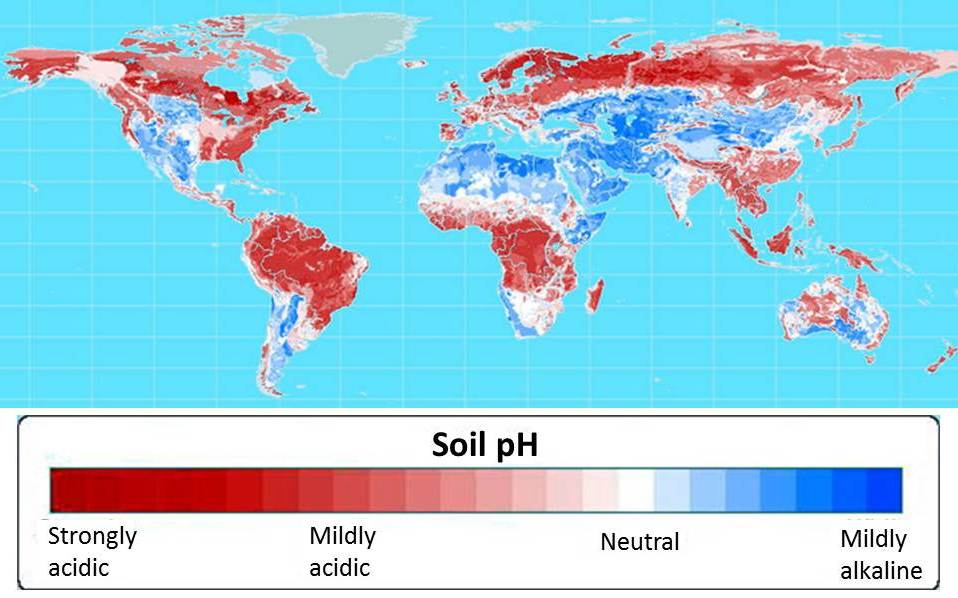
Cloning the AltSB gene would prove to be one of the first steps in GCP’s foundation sorghum and maize projects, both of which seek to provide farmers in the developing world with crops that will not only survive but thrive in the acidic soils that make up more than half of the world’s arable soils (see map below).

More than half of world’s potentially arable soils are highly acidic.

More than half of world’s potentially arable soils are highly acidic.

… identifying the AltSB gene was a significant achievement which brought the project closer to their final objective, which is to breed aluminium-tolerant crops that will improve yields in harsh environments, in turn improving the quality of life for farmers.”

A star is born: identifying and cloning AltSB
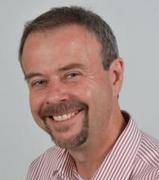
For 30 years, Leon Kochian (pictured below) has combined lecturing and supervising duties at Cornell University and the United States Department of Agriculture, with his quest to understand the genetic and physiological mechanisms behind the ability of some cereals to withstand acidic soils. Leon is also the Product Delivery Coordinator for GCP’s Comparative Genomics Research Initiative.

Leon Kochian

Leon Kochian

Aluminium toxicity is associated with acidic soils and is the primary limitation on crop production for more than 30 percent of farmland in Southeast Asia and Latin America, and approximately 20 percent in East Asia, sub-Saharan Africa and North America. Aluminium ions damage roots and impair their growth and function. This results in reduced nutrient and water uptake, which in turn depresses yield.

“These effects can be limited by applying lime to increase the soil’s pH. However, this isn’t a viable option for farmers in developing countries,” says Leon, who was the Principal Investigator for the premier AltSB project and is currently involved in several off-shoot projects.

Working on the understanding that grasses like barley and wheat use membrane transporters to insulate themselves against subsoil aluminium, Leon and Jura searched for a similar transporter in sorghum varieties that were known to tolerate aluminium.

“In wheat, when aluminium levels are high, these membrane transporters prompt organic acid release from the tip of the root,” explains Leon. “The organic acid binds with the aluminium ion, preventing it from entering the root. We found that in certain sorghum varieties, AltSB is the gene that encodes a specialised organic acid transport protein – SbMATE*  –  which mediates the release of citric acid. From cloning the gene, we found it is highly expressed in aluminium-tolerant sorghum varieties. We also found that the expression increases the longer the plant is exposed to high levels of aluminium.”

[*Editor’s note: different from the gene with the same name, hence not in italics]

Leon says identifying the AltSB gene and then cloning it was a significant achievement and it brought the project closer to their final objective, which he says is “to breed aluminium-tolerant crops that will improve yields in harsh environments, in turn improving the quality of life for farmers.”

This research was long and intensive, but it set a firm foundation for the work in GCP Phase II, which seeks to use what we have learnt in the laboratory and apply it to breed crops that are tolerant to biotic or abiotic stress such as aluminium toxicity and phosphorus deficiency.”

Comparative genomics: finding similar genes in different crops
Wheat, maize, sorghum and rice are all part of the Poaceae (grasses) family, evolving from a common grass ancestor 65 million years ago. Over this time they have become very different from each other. However, at a genetic level they still have a lot in common.

Over the last 20 years, genetic researchers all over the world have been mapping these cereals’ genomes. These maps are now being used by geneticists and plant breeders to identify similarities and differences between the genes of different cereal species. This process is termed comparative genomics and is a fundamental research theme for GCP research as part of its second phase.

rajeev-varshney_1332450938

Rajeev Varshney

“The objective during GCP Phase I was to study the genomes of important crops and identify genes conferring resistance or tolerance to biotic or abiotic stresses,” says Rajeev Varshney (pictured), Director, Center of Excellence in Genomics and Principal Scientist in applied genomics at the International Crops Research Institute for the Semi-Arid Tropics (ICRISAT). “This research was long and intensive, but it set a firm foundation for the work in GCP Phase II, which seeks to use what we have learnt in the laboratory and apply it to breed crops that are tolerant to biotic or abiotic stress such as aluminium toxicity and phosphorus deficiency.”

Until August 2013, Rajeev had oversight on GCP’s comparative genomics research projects on aluminium tolerance and phosphorus deficiency is sorghum, maize and rice, as part of his GCP role as Leader of the Comparative and Applied Genomics Theme.

“Phosphorus deficiency and aluminium toxicity are soil problems that typically coincide in acidic soils,” says Rajeev. “They are two of the most critical constraints responsible for low crop productivity on acid soils worldwide. These projects are combining the aluminium tolerance work done by EMBRAPA and Cornell University with the phosphorus efficiency work done by IRRI [International Rice Research Institute] and JIRCAS [Japan International Research Centre for Agricultural Sciences] to first identify and validate similar aluminium-tolerance and phosphorus-efficient genes in sorghum, maize and rice, and then, secondly, breed crops with these combined improvements.”

These collaborations are really exciting! They make it possible to answer questions that we could not answer ourselves, or that we would have overlooked, were it not for the partnerships.”

When AltSB met Pup1
Having spent more than a decade identifying and cloning AltSB, Jura and Leon have recently turned their attention to identifying and cloning the genes responsible for phosphorus efficiency in sorghum. Luckily, they weren’t starting from scratch this time, as another GCP project on the other side of the world was well on the way to identifying a phosphorus-efficiency gene in rice.

Led by Matthias Wissuwa at JIRCAS and Sigrid Heuer at IRRI, the Asian base GCP project had identified a gene locus, which encoded a particular protein kinase that allowed varieties with this gene to grow successfully in low-phosphorous conditions. They termed the region of the rice genome where this gene resides as ‘phosphorus uptake 1’ or Pup1 as it is commonly referred to in short.

“In phosphorus-poor soils, this protein kinase instructs the plant to grow larger, longer roots, which are able to forage through more soil to absorb and store more nutrients,” explains Sigrid. “By having a larger root surface area, plants can explore a greater area in the soil and find more phosphorus than usual. It’s like having a larger sponge to absorb more water!”

Read more about the mechanics of Pup-1 and the evolution of the project.

Jura and Leon are working on the same theory as IRRI and JIRCAS, that larger and longer roots enhance phosphorus efficiency. They are identifying sorghum with these traits, using comparative genomics to identify a locus similar to Pup1 in these low-phosphorus-tolerant varieties, and then verify whether the genes at this locus are responsible for the trait.

“So far, the results are promising and we have evidence that Pup1 homologues may underlie a major QTL for phosphorous uptake in sorghum,” says Jura who is leading the project to identify and validate Pup1 and other phosphorus-efficiency QTLs in sorghum.  QTL stands for ‘quantitative trait locus’ which refers to stretches of DNA containing ‒ or linked to ‒ the genes responsible for a quantitative trait  “What we have to do now is to see if this carries over in the field, leading to enhanced phosphorus uptake and grain yield in low-phosphorus soils,” he adds.

Jura and Leon are also returning the favour to IRRI and JIRCAS and are collaborating with both institutes to identify and clone in rice similar genes to the AltSB gene in sorghum.

“These collaborations are really exciting! They make it possible to answer questions that we could not answer ourselves, or that we would have overlooked, were it not for the partnerships,” says Sigrid.

To make a difference in rural development, to truly contribute to improved food security through crop improvement and incomes for poor farmers, we knew that capacity development had to be a continuing cornerstone in our strategy.”

Building capacity in Africa
In GCP Phase II which is more application oriented, projects must have objectives that deliver products and build capacity in developing-world breeding programmes.

Jean-Marcel Ribaut

Jean-Marcel Ribaut

“The thought behind the latter requirement is that GCP is not going to be around after 2014 so we need to facilitate these country breeding programmes to take ownership of the science and products so they can continue it locally,” says Jean-Marcel Ribaut, GCP Director (pictured). “To make a difference in rural development, to truly contribute to improved food security through crop improvement and incomes for poor farmers, we knew that capacity development had to be a continuing cornerstone in our strategy.”

Back to Brazil: Jura says this requirement is not uncommon for EMBRAPA projects as the Brazilian government seeks to become a world leader in science and agriculture. “Before GCP started, we had been working with African partners for five to six years through the McKnight Project. It was great when GCP came along as we were able to continue these collaborations.”

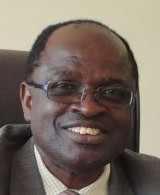
Samuel Gudu

Samuel Gudu

One collaboration Jura was most pleased to continue was with his colleague and friend, Sam Gudu (pictured), from Moi University, Kenya. Sam has been collaborating with Jura and Leon on several GCP projects and is the only African Principal Investigator in the Comparative Genomics Research Initiative.

“Our relationship with EMBRAPA and Cornell University has been very fruitful,” says Sam. “We wouldn’t have been able to do as much as we have done without these collaborations or without our other international collaborators at IRRI, JIRCAS, ICRISAT or Niger’s National Institute of Agricultural Research [INRAN].”

Sam is currently working on several projects with these partners looking at validating the genes underlying major aluminium-tolerance and phosphorus-efficiency traits in local sorghum and maize varieties in Kenya, as well as establishing a molecular breeding programme.

“The molecular-marker work has been very interesting. We have selected the best phosphorus-efficient lines from Brazil and Kenya, and have crossed them with local varieties to produce several really good hybrids which we are currently field-testing in Kenya,” explains Sam. “Learning and using these new breeding techniques will enable us to select for and breed new varieties faster.”

Sam is also grateful to both EMBRAPA and Cornell University for hosting several PhD students as part of the project. “This has been a significant outcome as these PhD students are returning to Kenya with a far greater understanding of molecular breeding which they are sharing with us to advance our national breeding programme.”

We’ve used the knowledge that Jura’s and Leon’s AltSB projects have produced to discover and validate similar genes in maize…We identified Kenyan lines carrying the superior allele of ZmMATE …This work will also improve our understanding of what other mechanisms may be working in the Brazilian lines too.” 

‘Everyone’ benefits! Applying the AltSB gene to maize
Claudia Guimarães (pictured) is a maize geneticist at EMBRAPA. But unlike Jura, her interest lies in maize.

Claudia

Claudia Guimarães

Working on the same comparative genomics principle used to identify Pup1 in sorghum, Claudia has been leading a GCP project replicating the sorghum aluminium tolerance work in maize.

“We’ve used the knowledge that Jura’s and Leon’s AltSBprojects have produced to discover and validate similar genes in maize,” explains Claudia. “From our mapping work we identified ZmMATE as the gene underlying a major aluminium tolerance QTL in maize. It has a similar sequence as the gene found in sorghum and it encodes a similar protein membrane transporter that is responsible for citrate extradition.”

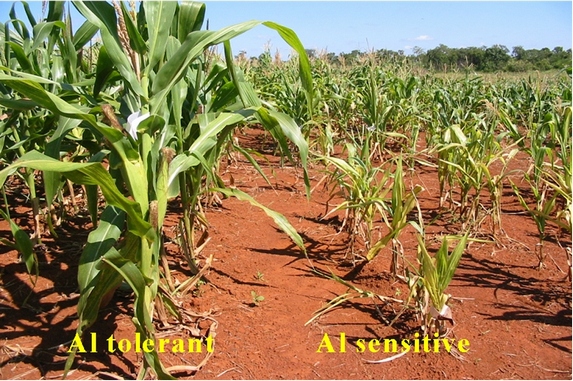
A maize field at EMBRAPA. Maize on the left is aluminum-tolerant while the maize on the right is not.

A maize field at EMBRAPA. Maize on the left is aluminium-tolerant while the maize on the right is not.

Using molecular markers, Claudia and her team of researchers from EMBRAPA, Cornell University and Moi University have developed near-isogenic lines from Brazilian and Kenyan maize varieties that show aluminium tolerance, with ZmMATE present. From preliminary field tests, the Brazilian lines have had improved yields in acidic soils.

“We identified a few Kenyan lines carrying the superior allele of ZmMATE that can be used as donors to develop maize varieties with improved aluminium tolerance,” says Claudia.  “This work will also improve our understanding of what other mechanisms may be working in the Brazilian lines too.”

What has pleased Jura and other Principal Investigators the most is the leadership that African partners have taken in GCP projects.

Cherry on the cereal cake
With GCP coming to an end in December 2014, Jura is hopeful that his and other offshoot projects dealing with aluminium tolerance and phosphorus efficiency will deliver on what they set out to do.

“For me, the cherry on the cake for the aluminium-tolerance projects would be if we show that AltSB improves tolerance in acidic soils in Africa. If everything goes well, I think this will be possible as we have already developed molecular markers for AltSB.”

What has pleased Jura and other Principal Investigators the most is the leadership that African partners have taken in GCP projects.

“This has been a credit to them and all those involved to help build their capacity and encourage them to take the lead. I feel this will help sustain the projects into the future and one day help these developing countries produce varieties of sorghum and maize for their farmers that are able to yield just as well in acidic soils as they do in non-acidic soils.”

In the foreground, left to right, Leon, Jura and Sam in a maize field in Kenya.

In the foreground, left to right, Leon, Jura and Sam in a maize field at the Kenya Agricultural Research Institute (KARI), Kitale, in May 2010. They are examining crosses between Kenyan and Brazilian maize germplasm.

Links


Jun 242014
 

Triumphs and tragedies, pitfalls and potential of the ‘camel crop’Cassava leaf. Photo: N Palmer/CIAT

We travel through space and time, with a pair of researchers who have a pronounced passion for a plant brought to Africa by seafaring Portuguese traders in the 16th century. Fastforwarding to today, half a millennium later, the plant is widespread and deep inland, and is the staple food for Africa’s most populous nation – Nigeria.

Meet cassava, the survivor. After rice and maize, cassava is the third-largest source of carbohydrate in the tropics. Surviving, nay thriving, in poor soils and shaking off the vagaries of weather – including an exceptionally high threshold for drought – little wonder that cassava, the ‘camel’ of crops is naturally the main staple in Nigeria. And with that, it has propelled Nigeria to the very top of the cassava totem pole as the world’s leading cassava producer, and consumer: most Nigerians eat cassava in one form or another practically every day.

Great, huh? But there’s also a darker side to cassava, as we will soon find out from our two cassava experts. For starters, the undisputed global cassava giant, Nigeria, produces just enough to feed herself. Even if there were a surplus for the external demand, farming families, which make up 70 percent of the Nigerian population, have limited access to these lucrative external markets. Secondly, cassava mosaic disease (CMD) and cassava brown streak disease (CBSD) are deadly in Africa. Plus, cassava is a late bloomer (up to two years growth cycle, typically one year), so breeding and testing improved varieties takes time. Finally, cassava is most definitely not à la mode at all in modern crop breeding: the crop is an unfashionably late entrant into the world of molecular breeding, owing to its complex genetics which denied cassava the molecular tools that open the door to this glamour world of ‘crop supermodels’.

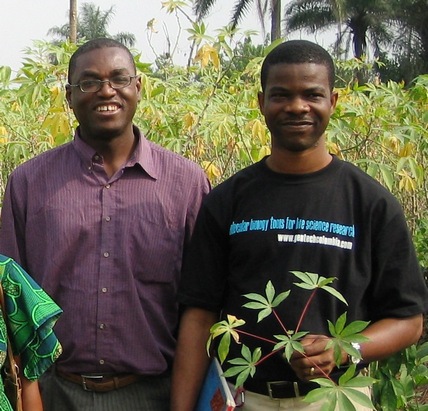
Emmanuel Okogbenin (left) and Chiedozie Egesi (right) in  a cassava field.

Emmanuel Okogbenin (left) and Chiedozie Egesi (right) in a cassava field.

But all is not doom and gloom, which inexorably dissolve in the face of dogged determination. All the above notwithstanding, cassava’s green revolution seems to be decidedly on the way in Nigeria, ably led by born-and-bred sons of the soil: Chiedozie Egesi and Emmanuel Okogbenin (pictured right) are plant breeders and geneticists at the National Root Crops Research Institute (NRCRI). With 36 years’ collective cassava research experience between them, the two men are passionate about getting the best out of Nigeria’s main staple crop, and getting their hands into the sod while about it: “I’m a plant breeder,” says Chiedozie, with pride. “I don’t just work in a laboratory. I am also in the field to experience the realities.”

Hitting two birds with one stone…two stones are even better!
As Principal Investigators (PIs) leading three different projects in the GCP-funded Cassava Research Initiative, Chiedozie and Emmanuel, together with other colleagues from across Africa, form a formidable team. They also share a vision to enable farmers increase cassava production for cash, beyond subsistence. This means ensuring farmers have new varieties of cassava that guarantee high starch-rich yields in the face of evolving diseases and capricious weather.

Chiedozie is one of cassava’s biggest fans. His affection for, and connection to, cassava is almost personal and definitely paternal. He is determined to deploy the best plant-breeding techniques to not only enhance cassava’s commercial value, but to also protect the crop against future disease outbreaks, including ‘defensive‘ breading. But more on that later…

Emmanuel is equally committed to the cassava cause. As part of his brief, Emmanuel liaises with the Nigerian government, to develop for – and promote to – farmers high-starch cassava varieties. This ensures a carefully crafted multi-pronged strategy to revolutionise cassava: NRCRI develops and releases improved varieties, buttressed by financial incentives and marketing opportunities that encourage farmers to grow and sell more cassava, which spurs production, thereby simultaneously boosting food security while also improving livelihoods.

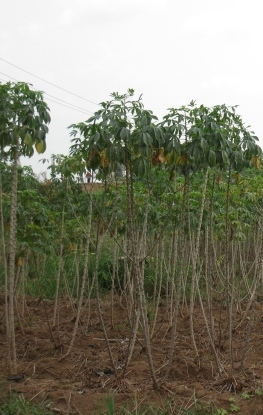
erect cass1_LS 4 web

Standing tall. Disease resistance and high starch and yield aside, farmers also prefer an upright architecture, which not only significantly increases the number of plants per unit, but also favours intercropping, a perennial favourite   for cassava farmers.

Cross-continental crosses and cousins, magic for making time, and clocking a first for cassava

No one has been able to manufacture time yet, so how can breeders get around cassava’s notoriously long breeding cycle? MAS (marker-assisted selection) is crop breeding’s magic key for making time. And just as humans can benefit from healthy donor organ replacement, so too does cassava, with cross-continental cousins donating genes to rescue the cousin in need. Latin American cassava is nutrient-rich, while African cassava is hardier, being more resilient to pests, disease and harsh environments.

Thanks to marker-assisted breeding, CMD resistance from African cassava can now be rapidly ‘injected’ much faster into Latin American cassava for release in Africa. Consequently, in just a three-year span (2010–2012), Chiedozie, Emmanuel, Martin Fregene of the Donald Danforth Plant Science Center (USA) and the NRCRI team, released two new cassava varieties from Latin American genetic backgrounds (CR41-10 and CR36-5). These varieties, developed with GCP funding, are the first molecular-bred cassava ever to be released, meaning they are a momentous milestone in cassava’s belated but steady march towards its own green revolution.

Marker-assisted selection is much cheaper, and more focused.” 

On the cusp of a collaborative cassava revolution: on your marks…
With GCP funding, Chiedozie and Emmanuel have been able to use the latest molecular-breeding techniques to speed up CMD resistance. Using marker-assisted selection (MAS) which is much more efficient, the scientists identified plants combining CMD resistance with desirable genetic traits.

“MAS for CMD resistance from Latin American germplasm is much cheaper, and more focused,” explains Emmanuel. “There is no longer any need to ship in tonnes of plant material to Africa. We can narrow down our search at an early stage by selecting only material that displays markers for the genetic traits we’re looking for.” Using markers, combining traits (known as ‘gene pyramiding’) for CMD resistance is faster and more efficient, as it is difficult to distinguish phenotypes with multiple resistance in the field by just observing with the naked eye. This is what makes marker-assisted breeding so effective and desirable in Africa.

GCP’s mode of doing business coupled with its community spirit has spurred the NRCRI scientists to cast their eyes further out to the wider horizon beyond their own borders.

By collaborating with research centres in other parts of the world, Emmanuel and Chiedozie have made remarkable strides in cassava breeding. According to Emmanuel, “GCP helped us make links with advanced laboratories and service providers like LGC Genomics. The outsourcing of genotyping activities for molecular breeding initiatives is very significant, as it enables us to carry out analyses not otherwise possible.”

We can’t afford to sit idle until it comes – we need to be armed and on the ready.”

‘Defensive’ breeding: partnerships to pre-empt catastrophe and combat disease
Closer home in Africa, as PI of the corollary African breeders community of practice (CoP) project, Emmanuel co-organises regular workshops with plant breeders from a dozen other countries (Côte d’Ivoire, DR Congo, Ethiopia, Ghana, Kenya,  Liberia, Malawi, Mozambique, Sierra Leone, Tanzania, Uganda and South Sudan). These events are an opportunity to share knowledge on molecular breeding and compare notes.

Of the diseases that afflict cassava, CBSD is the most devastating. Mercifully, in Nigeria, the disease is non-existent, but Chiedozie is emphatic that this is by no means cause for complacency. “If CBSD gets to Nigeria, it would be a monumental catastrophe!” he cautions. “We can’t afford to sit idle until it comes – we need to be armed and on the ready.”

Putting words to action, though this work on CBSD resistance is still in its early stages, more than 1,000 cassava genotypes (different genetic combinations) have already have been screened in the course of just one year. Chiedozie hopes that the team will be able to identify key genetic markers, and validate these in field trials in Tanzania, where CBSD is widespread. This East African stopover, Chiedozie emphasises, is a crucial checkpoint in the West African process. So the cassava CoP not only provides moral but also material support.

And Africa is not the limit. GCP-funded work on CMD resistance is more advanced than the CBSD work, though the real breakthrough in CMD only happened recently, on the international arena within which the African breeders now operate. According to Chiedozie, two entire decades of screening cassava genotypes from Latin America yielded no resistance to CMD. The reason for this is that although it is widespread in Africa, CMD is non-existent in Latin America.

Through international collaborative efforts, cassava scientists, led by Martin Fregene (now based in USA), screened plants from Nigeria and discovered markers for the CMD2 gene, indicating resistance to CMD. Once they had found these markers, the scientists were off and away! By taking the best of the Latin American material and crossing it with Nigerian genotypes that have CMD resistance, promising lines were developed from which the Nigerian team produced two new varieties. These varieties, CR41-10 and CR36-5, have already been released to farmers, and that is not all. More varieties bred using these two as parents are in the pipeline.

“GCP funding has given us the opportunity to show that a national organisation can do the job and deliver.” 


Delivery attracts
The success of the CGP-funded cassava research in Nigeria lies in its in-country leadership. Chiedozie, Emmanuel and Martin are native Nigerian scientists and as such are – in many ways – best placed to drive a research collaboration to benefit the country’s farmers and boost food security. “GCP funding has given us the opportunity to show that a national organisation can do the job and deliver,” says Chiedozie.

This proven expertise has helped NRCRI forge other partnerships and attract more financial support, for example from the Bill & Melinda Gates Foundation for a project on genomic selection. GCP support has also bolstered communications with the Nigerian government, which has launched financial instruments, such as a wheat tariff,* to boost cassava production and use.

[Editors note: * wheat tariff: The Nigerian government is trying to reduce wheat import bills and also boost cassava commercialisation by promoting 20 percent wheat substitution in bread-making. Tariffs are being imposed on wheat to dissuade heavy imports and encourage utilisation of high-quality cassava flour for bread.]

“The government feels that to quickly change the fortunes of farmers, cassava is the way to go,” explains Emmanuel. He clarifies, “The tariff from wheat is expected to be ploughed back to support agricultural development – especially the cassava sector – as the government seeks to increase cassava production to support flour mills. Cassava offers a huge opportunity to transform the agricultural economy and stimulate rural development, including rapid creation of employment for youth.”

The Nigerian government is right in step aiding cassava’s march towards the crop’s own green revolution, as is evident in the the Minister of Agriculture’s tweet earlier this year, and in his video interview below. See also related media story, ‘Long wait for cassava bread’.

Clearly, the ‘camel’ crop – once considered an ‘orphan’ in research  –  has travelled as far in science as in geography, and it is a precious asset to deploy for food production in a climate-change-prone world. As Emmanuel observes, cassava’s future can only be brighter!

Slides by Chiedozie and Emmanuel


More links


May 302014
 
Rogério Chiulele

Rogério Chiulele


Today, we travel the Milky Way on a voyage to Mozambique. Our man along the Milky Way is Rogério Marcos Chiulele (pictured), a lecturer at Mozambique’s Universidade Eduardo Mondlane’s Crop Science Department. He is also the lead scientist for cowpea research in Mozambique for the Tropical Legumes I (TLI) project. This gives Rogério a crucial tri-focal down-to-earth and away-from-the-clouds perspective on cowpea pedagogy, research and development. It is through this pragmatic triple-lens prism that Rogerio speaks to us today, once he’s captained us safely back from the stars to Planet Earth, Southeast Africa. After the protein and profit, next stop for him and team is ridding cowpeas of pod-sucking pests, among other things slated for the future. But back from the future to the present and its rooted realities…Problems, yes, but also lots of good scores, plus a deft sleight of hand that are bound to have you starry-eyed, we bet.

…cowpeas rank fourth as the most cultivated crop…”

Q: Tell us about Mozambique and cowpeas: are they important?

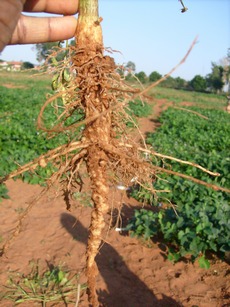
The devastating effects of nematodes on cowpea roots.

The devastating effects of nematodes on cowpea roots.

In Mozambique, cowpeas are an important source of food, for both protein and profit, particularly for the resource-poor households that benefit from cowpea income and nutrition. In terms of cultivation, cowpeas rank fourth as the most cultivated crop after maize, cassava and groundnuts, accounting for about 9 percent of the total cultivated area, and estimated at nearly four million hectares of smallholder farms. The crop is produced for grain and leaves, mostly for household consumption but it is becoming increasingly important as a supplement for household income.

But while its potential for food, protein and income is recognised, the realisation of such potential is still limited by drought due to irregular and insufficient rain; affliction by pests such as aphids, flower thrips and nematodes; diseases such as cowpea aphid mosaic virus and cowpea golden mosaic virus; and cultivation of low-yielding and non-improved varieties.

…we backcross to varieties with traits that farmers prefer…”

Q: And on cowpea research and breeding?
Since 2008, Universidade Eduardo Mondlane [UEM] established a cowpea-breeding programme for addressing some of the limiting constraints affecting cowpea production and productivity. This has been possible through collaboration with different funding institutions such as the Generation Challenge Programme.

Photo: UEM

2008: Screening of the 300 genotypes.

That same year [2008], a UEM research team that I coordinate qualified for a GCP capacity-building à la carte grant. In this project, we screened 300 Mozambican cowpea lines for drought tolerance. From these, we identified 84 genotypes that were either high-yielding or drought-tolerant. We further evaluated the 84 genotypes for another three seasons in two locations. From the 84, we identified six genotypes that not only had the two sought-after traits, but were also adapted to different environments.

In 2010, the UEM team joined the TLI project. For the six pre-identified genotypes, the UEM breeding programme is using marker-assisted recurrent selection [MARS] and marker-assisted backcrossing [MABC], combining drought tolerance and resistance to major biotic stresses occurring in Mozambique. In MABC, we are conducting a backcross to varieties with traits that farmers prefer, which includes aspects such as large seeds, early maturity and high leaf production.

…we conducted a farmers’ participatory varietal selection to glean farmers’ perceptions and preferences on cowpea varieties and traits…”

Q: What is the main focus in your work, and how and when do farmers come in?
The breeding work conducted by UEM is targeting all Mozambican agroecologies, but with particular focus on southern Mozambique which is drought-prone. In addition to drought, the area is plagued by many pests such as aphids, flower thrips, nematodes and pod-sucking pests. So, in addition to drought tolerance, we are conducting screening and selection for resistance to aphids, flower thrips and nematodes. In the near future, we will start screening for resistance to pod-sucking pests.

2009: field screening of the 84 genotypes in diff locations.

2009: Rogério during field screening of the 84 genotypes in different locations.

In 2009, we conducted a farmers’ participatory varietal selection to glean farmers’ perceptions and preferences on cowpea varieties and traits. From the study, six of the lines passed participatory variety selection with farmers, as they were large-seeded with good leaf production which provides additional food.

we hope to release three varieties in 2015…Our involvement with GCP has not only increased our exposure, but also brought along tangible benefits… I firmly believe black-eyed peas can really make a difference.”

Q: To what would you attribute the successes your team is scoring, and what are your goals for the future, besides screening for pod-sucking pests?
The success of the work that the Eduardo Mondlane team is doing is partly due to the collaboration and partnership with USA’s University of California, Riverside [UCR]. UCR sent us 60 lines from the GCP cowpea reference set* [Editorial note: see explanation at the bottom], which we evaluated for drought tolerance for four seasons in two locations – one with average rainfall and the other drought-prone. As these lines were already drought-tolerant, we tested them for adaptation to the local environment, and for high yield. From the set, we hope to release three varieties in 2015. In addition, for evaluating the different varieties, we also crossed the local varieties with black-eyed peas, which have a huge market appeal: local varieties fetch roughly half a US dollar per kilo, compared to black-eyed peas whose price is in the region of four to five US dollars.

2013: multilocation trials.

2013: multilocation trials.

Our involvement with GCP has not only increased our exposure, but also brought along tangible benefits. For example, previously, nothing was being done on drought tolerance for cowpeas. But now we receive and exchange material, for example, the black-eyed peas from UCR that we received through GCP, which are set to boost production and markets, thereby improving lives and livelihoods. Amongst the varieties we are proposing to release is one black-eye type. I firmly believe black-eyed peas can really make a difference.

In addition, besides funding a PhD for one of our researchers, Arsenio Ndeve, who is currently at UCR, the Generation Challenge Programme, contributed to improvement on storage and irrigation facilities. We purchased five deep freezers for seed storage and one irrigation pump. Presently, we have adequate storage facilities and we conduct trials even during the off-season, thanks to the irrigation pump provided by GCP.

****

And on that upbeat note even as the challenge ahead is immense, today’s chat with Rogério ends here. To both pod-sucking pests and all manner of plagues on cowpeas, beware, as thy days are numbered: it would seem that Rogério and team firmly say: “A pox on both your houses!”

*A ‘reference set’ is a sub-sample of existing germplasm collections that facilitates and enables access to existing crop diversity for desired traits, such as drought tolerance or resistance to disease or pests

Links

May 122014


Omari Mponda

Omari Mponda

After getting a good grounding on the realities of groundnut research from Vincent, our next stop is East Africa, Tanzania, where we meet Omari Mponda (pictured). Omari is a Principal Agricultural Officer and plant breeder at Tanzania’s Agricultural Research Institute (ARI), Naliendele, and country groundnut research leader for the Tropical Legumes I (TLI) project, implemented through our Legumes Research Initiative.  Groundnut production in Tanzania is hampered by drought in the central region and by rosette and other foliar diseases in all regions. But all is not bleak, and there is a ray of hope: “We’ve been able to identify good groundnut-breeding material for Tanzania for both drought tolerance as well as disease resistance,” says Omari. Omari’s team are also now carrying their own crosses, and happy about it. Read on to find out why they are not labouring under the weight of the crosses they carry…

…we have already released five varieties…TLI’s major investment in Tanzania’s groundnut breeding has been the irrigation system… Frankly, we were not used to being so well-equipped!”

Q: How  did you go about identifying appropriate groundnut-breeding material for Tanzania?
A: We received 300 reference-set lines from ICRISAT [International Crops Research Institute for the Semi-Arid Tropics], which we then genotyped over three years [2008– 2010] for both drought tolerance and disease resistance. After we identified the best varieties, these were advanced to TLII [TLI’s sister project] for participatory variety selection with farmers in 2011–2012, followed by seed multiplication. From our work with ICRISAT, we have already released five varieties.

Harvesting ref set collection at Naliendele_w

Harvesting the groundnut reference-set collection at Naliendele. A ‘reference set’ is a sub-sample of existing germplasm collections that facilitates and enables access to existing crop diversity for desired traits, such as drought tolerance or resistance to disease or pests.

ARI–Naliendele has also benefitted from both human and infrastructure capacity building. Our scientists and technicians were trained in drought phenotyping at ICRISAT Headquarters in India. One of our research assistants, Mashamba Philipo, benefitted from six-month training, following which he advanced to an MSc specialising in drought phenotpying using molecular breeding. In his work, he is now using drought germplasm received from ICRISAT. In terms of laboratory and field infrastructure, the station got irrigation equipment to optimise drought-phenotyping trials. Precision phenotyping and accurate phenotypic data are indispensable for effective molecular breeding. To facilitate this, ARI–Naliendele benefitted from computers, measuring scales, laboratory ware and a portable weather station, all in a bid to assure good information on phenotyping. But by far, TLI’s major investment in Tanzania’s groundnut breeding has been the irrigation system which is about to be completed. This will be very useful as we enter TLIII for drought phenotyping.


For us, this is a big achievement to be able to do national crosses. Previously, we relied on ICRISAT…we are advancing to a functional breeding programme in Tanzania… gains made are not only sustainable, but also give us independence and autonomy to operate..We developing-country scientists are used to applied research and conventional breeding, but we now see the value and the need for adjusting ourselves to understand the use of molecular markers in groundnut breeding.”

Omari (right), with Hannibal Muhtar (left), who was contracted by GCP to implement infrastructure improvement for ARI Naliendele. See http://bit.ly/1hriGRp

Flashback to 2010: Omari (right), with Hannibal Muhtar (left), who was contracted by GCP to implement infrastructure improvement for ARI Naliendele, and other institutes. See http://bit.ly/1hriGRp

Q: What difference has participating in TLI made?
A: Frankly, we were not used to being so well-equipped, neither with dealing with such a large volume as 300 lines! But we filtered down and selected the well-performing lines which had the desired traits, and we built on these good lines. The equipment purchased through the project not only helped us with the actual phenotyping and being able to accurately confirm selected lines, but also made it possible for us to conduct off-season trials.

We’re learning hybridisation skills so that we can use TLI donors to improve local varieties, and our technicians have been specifically trained in this area. For us, this is a big achievement to be able to do national crosses. Previously, we relied on ICRISAT doing the crosses for us, but we can now do our own crosses. The difference this makes is that we are advancing to a functional breeding programme in Tanzania, meaning the gains made are not only sustainable, but also give us independence and autonomy to operate. Consequently, we are coming up with other segregating material from what we’ve already obtained, depending on the trait of interest we are after.

Another big benefit is directly interacting with world-class scientists in the international arena through the GCP community and connections – top-rated experts not just from ICRISAT, but also from IITA, CIAT, EMBRAPA [Brazil], and China’s DNA Research Institute. We have learnt a lot from them, especially during our annual review meetings. We developing-country scientists are used to applied research and conventional breeding, but we now see the value and the need for adjusting ourselves to understand the use of molecular markers in groundnut breeding. We now look forward to TLIII where we expect to make impact by practically applying our knowledge to groundnut production in Tanzania.

Interesting! And this gets us squarely back to capacity building. What are your goals or aspirations in this area?
A: Let us not forget that TLI is implemented by the national programmes. In Africa, capacity building is critical, and people want to be trained. I would love to see fulltime scientists advance to PhD level in these areas which are a new way of doing business for us. I would love for us to have the capacity to adapt to our own environment for QTLs [quantitative trait loci], QTL mapping, and marker-assisted selection. Such capacity at national level would be very welcome. We also hope to link with advanced labs such as BecA [Biosciences eastern and southern Africa] for TLI activities, and to go beyond service provision with them so that our scientists can go to these labs and learn.

There should also be exchange visits between scientists for learning and sharing, to get up to date on the latest methods and technologies out there. For GCP’s Integrated Breeding Platform [IBP], this would help IBP developers to design reality-based tools, and also to benefit from user input in refining the tools.

Links

SLIDES by Omari on groundnut research and research data management in Tanzania


Apr 042014


Phil Roberts

Phil Roberts

Like its legume relatives, cowpeas belong to a cluster of crops that are still referred to in some spheres of the crop-breeding world as ‘orphan crops’. This, because they have largely been bypassed by the unprecedented advances that have propelled ‘bigger’ crops into the world of molecular breeding, endowed as they are with the genomic resources necessary. But as we shall hear from Phil Roberts (pictured), of the University of California–Riverside, USA, and also the cowpea research leader for the Tropical Legumes I Project (TLI), despite the prefix in the  name, this ‘little kid’ in the ‘breeding block’ called cowpeas is uncowed and unbowed, confidently striding into the world of modern crop breeding, right alongside the ‘big boys’! What more on this new kid on the block of modern molecular breeding? Phil’s at hand to fill us in…

Vigna the VIP that shrinks with the violets
But is no shrinking violet, by any means, as we shall see. Also known  as niébé in francophone Africa, and in USA as black-eyed peas (no relation to the musical group, however, hence no capitals!), this drought-tolerant ancient crop (Vigna unguiculata [L] Walp) originated in West Africa. It is highly efficient in fixing nitrogen in the unforgiving and dry sandy soils of the drier tropics. And that is not all. This modest VIP is not addicted to the limelight and is in fact outright lowly and ultra-social: like their fetching African counterpart in the flower family, the African violet, cowpeas will contentedly thrive under the canopy of others, blooming in the shade and growing alongside various cereal and root crops, without going suicidal for lack of limelight and being in the crowd. With such an easy-going personality, added to their adaptability, cowpeas have sprinted ahead to become the most important grain legume in sub-Saharan Africa for both subsistence and cash. But – as always – there are two sides to every story, and sadly, not all about cowpeas is stellar…

Improved varieties are urgently needed to narrow the gap between actual and potential yields… modern breeding techniques… can play a vital role”

A cowpea experimental plot at IITA.

A cowpea experimental plot at IITA.

What could be, and what molecular breeding has to do with it
Yields are low, only reaching a mere 10 to 30 percent of their potential, primarily because of insect- and disease-attack, sometimes further compounded by chronic drought in the desiccated drylands cowpeas generally call home. “Improved varieties are urgently needed to narrow the gap between actual and potential yields,” says Phil. The cowpea project he leads in TLI is implemented through GCP’s Legume Research Initiative. Phil adds, “Such varieties are particularly valuable on small farms, where costly agricultural inputs are not an option. Modern breeding techniques, resulting from the genomics revolution, can play a vital role in improving cowpea materials.”

He and his research team are therefore developing genomic resources that country-based breeding programmes can use. Target-country partners are Institut de l’Environnement et de Recherches Agricoles (INERA) in Burkina Faso; Universidade Eduardo Mondlane in Mozambique; and Institut Sénégalais de Recherches Agricoles (ISRA) in Senegal. Other partners are the International Institute of Tropical Agriculture (IITA) headquartered in Nigeria and USA’s Feed the Future Innovation Labs for Collaborative Research on Grain Legumes and for Climate Resilient Cowpeas.

It’s a lot easier and quicker, and certainly less hit-or-miss than traditional methods!… By eliminating some phenotyping steps and identifying plants carrying positive-trait alleles for use in crossing, they will also shorten the time needed to breed better-adapted cowpea varieties preferred by farmers and markets.”

Cowpea seller at Bodija Market, Ibadan, Nigeria.

Cowpea seller at Bodija Market, Ibadan, Nigeria.


On target, and multiplying the score
[First, a rapid lesson on plant-genetics jargon so we can continue our story uninterrupted: ‘QTLs’ stands for quantitative trait loci, a technical term in quantitative genetics to describe the locations where genetic variation is associated with variation in a quantitative trait. QTL analysis estimates how many genes control a particular trait. ‘Allele’ means an alternative form of a the same gene. Continuing with the story…]

The curved shape means that these cowpea pods are mature and ready for harvesting.

Culinary curves and curls: the curved shape means that these cowpea pods are mature and ripe for harvesting.

“We first verified 30 cowpea lines as sources of drought tolerance and pest resistance,” Phil recalls. “Using molecular markers, we can identify the genomic regions of the QTLs that are responsible for the desired target phenotype, and stack those QTLs to improve germplasm resistance to drought or pests. It’s a lot easier and quicker, and certainly less hit-or-miss than traditional methods! However, standing alone, QTLs are not the silver bullet in plant breeding. What happens is that QTL information complements visual selection. Moreover, QTL discovery must be based on accurate phenotyping information, which is the starting point, providing pointers on where to look within the cowpea genome. Molecular breeding can improve varieties for several traits in tandem,” suggests Phil. “Hence, farmers can expect a more rapid delivery of cowpea varieties that are not only higher-yielding, but also resistant to several stresses at once.”

And what are Phil and team doing to contribute to making this happen?

The genomic resources from Phase I – especially genotyping platforms and QTL knowledge – are being used in Phase II of the TLI Project to establish breeding paradigms, using molecular breeding approaches,” Phil reveals. He adds that these approaches include marker-assisted recurrent selection (MARS) and marker assisted back-crossing (MABC). “These paradigms were tested in the cowpea target countries in Africa,” Phil continues. “By eliminating some phenotyping steps and identifying plants carrying positive-trait alleles for use in crossing, they will also shorten the time needed to breed better-adapted cowpea varieties preferred by farmers and markets.”

… best-yielding lines will be released as improved varieties… others will be used…as elite parents…”

Future work
What of the future? Phil fills us in: “The advanced breeding lines developed in TLI Phase II are now entering multi-location performance testing in the target African countries. It is expected that best-yielding lines will be released as improved varieties, while others will be used in the breeding programmes as elite parents for generating new breeding lines for cowpeas.”

Clearly then, the job is not yet done, as the ultimate goal is to deliver better cowpeas to farmers. But while this goal is yet to be attained and – realistically – can only be some more years down the road, it is also equally clear that Phil and his team have already chalked up remarkable achievements in the quest to improve cowpeas. They hope to continue pressing onwards and upwards in the proposed Tropical Legumes III Project, the anticipated successor to TLI and its twin project TLII – Tropical Legumes II.

Links

cheap ghd australia