Feb 182014
 

Mark Sawkins

Mark Sawkins

Mark the man in the middle, and of the markers…

Today, we talk to Mark Sawkins (pictured), the ‘middleware’ man in our Integrated Breeding Platform (IBP) so to speak, seeing as he is the human ‘interface’ between crop breeders on the one hand, and the developers of our Integrated Breeding Platform (IBP) on the other hand. Mark is the ‘bridge’ that connects IBP users and IBP developers – a special position which gives him a privileged and fascinating perspective on both sides of the coin, with a dash of public–private sector pragmatic partnership thrown in too. Here’s more on Mark, in this dispatch from and on his special perch on the bench…

Bridge to bench, abuzz on BMS: A ‘tinker’ at Toulouse…
Mark Sawkins is always busy tinkering away on his Workbench at his base in Toulouse in southern France. It’s not your traditional wooden workbench, covered in sawdust, soil or splattering of paint. Nor is it one carpeted in documents lit by the warm glow of a computer monitor. In fact, the workbench Mark is working on is virtual, having no physical form and residing solely online, or on a user’s computer, once downloaded.

Known as the Breeding Management System (BMS) the Workbench, comprising software tools linked to a database for access to pedigree, phenotypic and genotypic data, has been developed by GCP’s Integrated Breeding Platform. The BMS has what a crop breeder would require to conduct an analysis of phenotypic and genotypic data generated as part of a crop-breeding or evaluation experiment, covering a broad spectrum of needs from conventional breeding to advanced molecular breeding applications. Version 2 of the Breeding Management System was released just last month.

… it [BMS] will be of most help to breeders both in the public and private sector in Africa and Asia who, up to now, have had little or no access to tools and data to allow them to shift gears in their breeding programme…The BMS has a lot of tools and all the foundational data necessary for a breeder’s routine day-to-day activities…The BMS is also anticipated to have enormous positive impact on food security in developing countries in the years ahead, enabling crop breeders to evaluate their progenies using the most sophisticated statistical methods available”
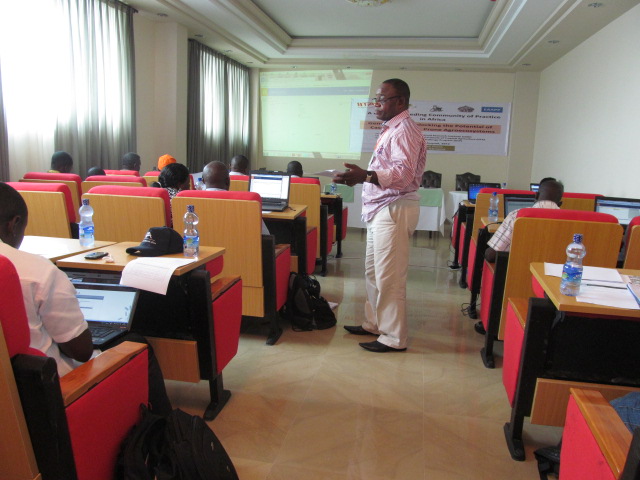
A hands-on BMS orientation workshop underway for breeders in Africa, held in Ethiopia in July 2013 under the auspices of the GCP-funded cassava breeding community of practice. Standing, Yemi Olojode, of Nigeria’s National Root Crops Research Institute (NRCRI), Umidike, who was one of the trainers.

Previously known as the Integrated Breeding Workflow System (IBWS), the BMS incorporates both statistical analysis tools and decision-support tools. The tools are assembled in a way that data can flow seamlessly from one application to the next in tandem with the various stages of the crop-breeding process. It allows the breeder to accurately collect, securely store and efficiently analyse and synthesise their data on a local private database, and also share, or compare, their data with other breeders via a central public crop database.

“The BMS has a lot of tools and all the foundational data necessary for a breeder’s routine day-to-day activities,” explains Mark, a plant geneticist who joined IBP in 2011. “Any breeder can use it, but it will be of most help to breeders both in the public and private sector in Africa and Asia who, up to now, have had little or no access to tools and data to allow them to shift gears in their breeding programme, particularly in adopting modern breeding practices, including the use of molecular markers.”

The BMS is also anticipated to have enormous positive impact on food security in developing countries in the years ahead, enabling crop breeders to evaluate their progenies using the most sophisticated statistical methods available, and make selections on which lines to advance to the next phase of development in the progression towards more productive and resilient crop varieties.

Phenotyping and field trials are becoming the most expensive part of the breeding process… The biggest hurdle in the public sector in the past was the massive investment required to set up genotyping laboratory facilities… outsourcing, we believe, will help convince breeders to consider integrating molecular techniques into their breeding programmes”

Why integrated breeding?
For almost 30 years, the private sector has been implementing molecular-breeding approaches in developing more productive and resilient crops. These approaches allow breeders to select for plant characteristics (traits) early in the breeding process and then test whether a plant has the targeted trait, which they cannot visually identify.

“Phenotyping and field trials are becoming the most expensive part of the breeding process,” says Mark. “Using molecular markers is a way to reduce the investment in that process. By using markers, early in the development of a given crop line, you can reduce the number of plants you need to grow and test, reducing the time and cost associated with field trials.”

Mark hopes that the Workbench will in time enable breeders, in under-resourced public breeding institutes to access some of the leading molecular-marker databases, and make use of the markers therein for the desired traits they are breeding for, along with technical support from molecular breeders to guide them in making their breeding decisions.

“The biggest hurdle in the public sector in the past was the massive investment required to set up genotyping laboratory facilities,” explains Mark “but now there are plenty of professional service providers that people can send their samples to and get back good results at a very reasonable cost. This time- and cost-saving reality of outsourcing, we believe, will help convince breeders to consider integrating molecular techniques into their breeding programmes.”

We are currently conducting a three-year course to train scientists from national programmes in West and Central Africa, East and Southern Africa and South and Southeast Asia, who we hope will promote and support the adoption of modern breeding in their institutes and countries.”
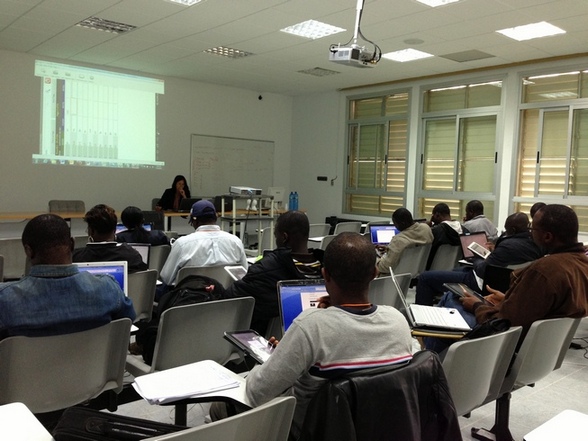
An IB-MYC training course in session in April 2013 for the West and Central Africa group. Clarissa Pimentel, IBP's Data Manager/Training Specialist, at the front, traching trainees tricks on using Fieldlab in the tablet for data collection.

An Integrated Breeding Multiyear Course (IB-MYC) training course in session in April 2013 for the West and Central Africa group. Clarissa Pimentel, IBP’s Data Manager/Training Specialist, at the front, giving trainees tricks and tips on using FieldLab on the electronic tablet for field data collection.

Running with champions
Mark knows that giving breeders the tools and means to integrate molecular breeding into their programmes is one thing. To actually have them adopt them is another. But he has a plan.

In keeping with the core mission of GCP, which is to build sustainable capacity in developing-country breeding programmes, Mark proposes to recruit and train selected breeders in molecular-breeding techniques and set them up as champions and advocates for their particular crop or region.

Marker implementation methods can be varied but the tools required need to help the breeder make a quick informed decision on what to take forward to the next generation: What plants need to be crossed? Which plants should be kept and which ones discarded? The decision-support tools provided by the IB Workbench will help the breeder make these decisions.

“We are currently conducting a three-year course to train scientists from national programmes in West and Central Africa, East and Southern Africa and South and Southeast Asia, who we hope will promote and support the adoption of modern breeding in their institutes and countries,” Mark enthusiastically explains. The three-year training programme is known as the Integrated Breeding Multiyear Course (IB–MYC). Mark continues, “We believe that people will be more willing to listen to someone who is right there on the ground, whom they know and trust and can easily get in contact with if they need help.”

While the champions concept is still in its infancy, Mark believes it has real merit but must overcome two major barriers – time and confidence. “Identifying the champions won’t be hard,” he observes, “What will be hard is getting them to add this extra task to their already busy agenda. It will require buy-in from management at the institutional level to enable the champions to carry out their mission. It will also be individually hard for each champion, who will only be successful when they have the confidence in their own integrated breeding and extension skills. This confidence would be the thing that would really help sell the message.”

Engaging the private sector
Mark oversees the design, testing and deployment of the system that underpins the BMS, ensuring that both the system and the tools embedded in it are easy to use and meet the needs and expectations of the breeders. However, he and his team have had some trouble getting feedback on the system from the breeders it is intended for, due to their inexperience with such tools and systems. That is why he has called on his private-sector contacts, developed when he was at Syngenta where he worked for five years prior to his current assignment.

“We hope to show them what we’ve been doing in IBP with the Workbench, and hopefully get some private-sector buy-in and see how they can help us – not in developing tools, but with feedback on functionality and usability of the tools we are developing,” he explains. “We don’t have a core set of breeders who are routinely using markers in their breeding programme amongst the partners we are working with on the IBP project. So we are tapping into the private sector which has teams of molecular breeders who are more familiar with the types of breeding workflows and tools we are developing. We’re hoping that we can take advantage of their knowledge and experience to get some really useful feedback, which we will use to improve the usability and effectiveness of our tools.”

To maximise adoption and use, GCP has been actively engaged in extensive capacity building, and this will be reinforced with a comprehensive awareness-creation and communication effort immediately before and after a projected mid-year release of a newer BMS version incorporating the all-essential user feedback. The impact of the analytical pipeline in developing countries will be particularly enhanced with the availability of efficient user support services, which Mark will be overseeing.

Access the Breeding Management System (no-cost registration required)

More information

VIDEO: IBP’s comparative advantage for developed countries, while also relevant for developed countries.

SLIDES: IBP’s Breeding Management System


Jan 312014
 
Arllet Portugal

Arllet Portugal

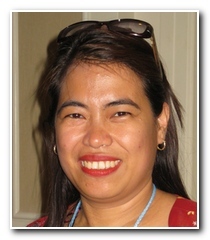
Today, we chit-chat with Arllet Portugal (pictured) on crop research data management. Arllet’s greatest daily challenge is convincing crop breeders and other crop researchers that their research data are just as important as their core research work. She also educates us on what she means by ‘SHARP’ data management. But first, a little background on Arllet…

Transitions, travels and tools
Plant breeding is in Arllet Portugal’s blood. Her father (now retired), one of the original field staff of the International Rice Research Institute (IRRI) at Los Baños in The Philippines, nurtured it in her from a tender age. It’s easy to picture him sharing fascinating tales daily with his family upon coming home, after a day of hard work in sun-splashed paddies where he nurtured mysterious and exotic new lines of rice which he was told may hold the solution to world hunger.

“He loved what IRRI stood for and admired the research they did,” reminisces Arllet. “I think he hoped one day he would have a son or daughter working alongside the researchers, so I guess I fulfilled that wish!” She adds “His IRRI stories still continue to this day, and I have learnt much from him which continues to give me deeper insights in my work and interactions with crop scientists.”

Having lived most of her life under the canopy of IRRI, including 12 years working as a database administrator at the Institute, she decided it was time for a change, and she spread her wings – an adventure that would take her across the oceans, pose new challenges, and plunge her deeper into agricultural research beyond IRRI’s mandate crop, rice. So, in 2009, she packed her bags and headed to Mexico, having accepted a position as a crop informatician for wheat at the International Maize and Wheat Improvement Center (CIMMYT), and then moving over to GCP the following year as Informatics Coordinator, and later on Data Management Leader of GCP’s Integrated Breeding Platform (IBP).

The Platform is a one-stop shop for crop information, informatics tools and services designed to propagate and support the application of modern approaches to crop breeding, particularly targeting developing countries.

We are trying to show breeders that their ‘system’ can be enhanced and streamlined if they enter data straight into a computer when they’re in the field and then upload them into an online database.” 

Gunning for a digital data revolution: The challenge of changing mindsets
Arllet’s greatest daily challenge is convincing crop breeders and other crop researchers that their research data are just as important as their core research work, and they should therefore dedicate as much time, energy and resources to managing data.

“Like everyone else, most plant breeders tend to be generally comfortable with the ‘systems’ that they and their predecessors have always used,” says Arllet. “For plant scientists, this often consists of recording results using pen and paper when they are out in the field, then coming back to their office and either filing those paper records as is, or re-entering the data into a basic Excel spreadsheet that is for their eyes only. They will then pull these data out when they want to compare them with their previous data.”

Arllet explains that this age-old system is not necessarily wrong, but it wastes valuable time, is insecure and limits the capacity of breeders to efficaciously reuse and also share their data with colleagues – a practice by which they would help each others’ work. “We are trying to show breeders that their ‘system’ can be enhanced and streamlined if they enter data straight into a computer when they’re in the field and then upload them into an online database,” she says.

Walking with giants…” 

Dealing with data: maximising efficiency, security, value and sharing
“These data can then be better secured and managed for their benefit and that of other researchers doing similar or related work, in essence increasing their working capacity. They would also have access to the most current analytical tools to verify their results and do their research more efficiently.”

Arllet explains that such improved systems have been in place for decades in the developed world, particularly within the private sector but not as prevalent in the developing world or public sector. This is largely attributable to the high cost of the equipment and informatics tools, and a lack of personnel with the appropriate skills to make use of the tools.

Through a collaborative effort bringing together a wide array of partners, with funding primarily from the Bill & Melinda Gates Foundation, supplemented by the European Commission and the United Kingdom’s Department for International Development, IBP is working to overcome some of these barriers. With the release of the Integrated Breeding (IB) FieldBook, the foundational informatics tool for the proposed system, Arllet believes a giant step has been made towards achieving this objective.

Breeders will be able to use it to plan their trials from start to finish”

What is the IB FieldBook?
The IB FieldBook is a user-friendly computer program that facilitates the design of field trials and produces electronic field-books, field plans and labels. It collects together – in a single application – all the basic tools that a plant breeder requires for these diverse but intertwined functions.

“Breeders will be able to use it to plan their trials from start to finish,” says Arllet. “This is important as it will, for example, keep track of all the identities of plant crosses, minimising the chance that the breeder, or assisting technician, will record the data incorrectly, while emphasising the importance of accurate data for correct crop-breeding decisions.”

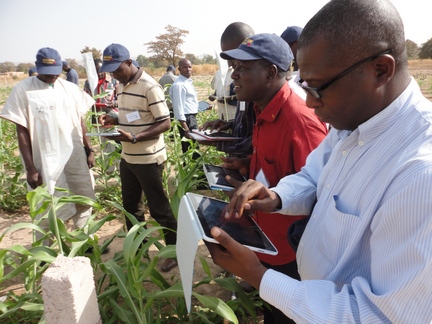
Live demonstration: Taking the tablet through the paces at a training workshop for research technicians in January 2012. The regional workshop for West Africa (in French and English) was hosted by L’Institut d’économie rurale (IER) at Sotuba, Mali. A similar workshop was held in Ethiopia in English for the Eastern and Southern Africa region.

She and her team have been conducting training workshops on data management for breeders at which they demonstrate the IB FieldBook and the use of handheld electronic devices (such as tablets) for data collection, which breeders can conveniently take to the field with them and directly enter the phenotyping data they would normally capture in paper field-books.

Tablets and feedback
“The training has been challenging but fun,” says Arllet. “When we present the breeders with a tablet at the start of the exercise, they get really excited. It takes a while for them to learn how to use it, but once they do, they see how this technology could save them time and reduce the risk of mistakes. It’s a little sad for them and for us though when we have to take the tablets back at the end of the exercise, as demand always outstrips supply. We have however distributed around 200 tablets to breeders, university academic staff, researchers and postgraduate students of plant breeding. Majority of the recipients are from Africa and Asia. And the good news is that,  as a result, some of the institutes and programmes the recipients come from have gone ahead to purchase more units for themselves.”

Arllet observes that the workshops have not only allowed her team to educate breeders and build awareness, but also to receive valuable feedback on how the IB FieldBook could be improved to make it even better, and learn what other tools breeders need. “Based on this feedback, we worked on the IB FieldBook version 4, which was released in June 2013, as well as on a number phenotypic and genotypic data management tools to incorporate into both the FieldBook and the primary crop databases.”

‘SHARP’ data – shareable, available, reusable and preservable. 

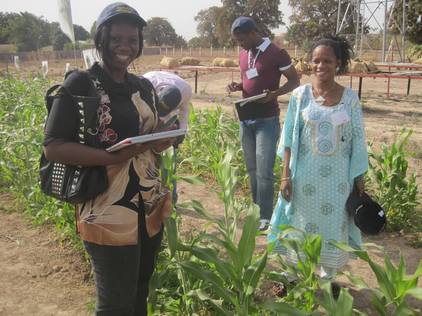
Left to right: Diarah Guindo (IER), Ardaly Abdou Ousseini (L’Institut national de la recherche agronomique du Niger, INRAN) and Aoua Maiga (IER) at the January 2012 training at IER Sotuba, Mali.

SHARP and secure data management
Plant breeders are collaborating more often than they used to, and also drawing much more on specialised experts for each stage of the crop variety development chain. These experts are able to verify the data to make sure they are correct, do their job quickly and pass the data onto the next expert, an economical resource- and time-efficient process. However, as Arllet explains, consistent and secure data management is key to the success of these collaborations.

For Arllet, data that are properly managed are ‘SHARP’shareable, available, reusable and preservable. “By collecting data in a consistent format, uploading them to a secure database with easily identifiable tags, and making them available to other researchers, the data will be more accessible to partners, enable reliable analysis and conclusions, be more likely to be reused, and most importantly, save time and money. For example, breeders who share their data on the IBP database will receive support from researchers outside of their own breeding programme and enlist the help of experts and specialists  they require for particular tasks,” says Arllet. “This includes access to, say, a molecular biologist in Europe or Asia for the breeder in Africa or America who may need that kind of specialist help, for example.”

Arllet and her team of four consultants are currently helping breeders from all around the world upload their historical research data into the central crop databases of the Integrated Breeding Platform, a massive task given the issues of trust, language barriers, slow internet connections, inadequate computer skills and the sheer volumes of the data. However, these are challenges that are becoming easier to handle with greater awareness and the enthusiasm that comes with that.

What next, and what difference will it make?
Adoption and broad use of the FieldBook will of course also make the process easier in the future, enabling a single step uploading of phenotypic data – hence setting breeders free to get on with their work without the wastefulness of having to enter and re-check the data multiple times.

“What it all means is that we will facilitate the more rapid and efficient development of higher-yielding  more stress-tolerant crops that can benefit the farmers and the people they feed,” says Arllet, “and that is the ultimate goal of a plant breeder’s work.”

Links

See videos below: ‘ Masses of crop breeding information: How can it be handled?’ and “Why use IBP’s breeding and data management tools?“, which, in the view of one of our Australian partners, explains why IBP is particularly important for developing countries, and why they have a comparative advantage compared to the developed world.

Next video below:

PRIZE AND FUN! If you’ve survived this far, you deserve a prize, in the form of seeing Ms Portugal in party mode. To see what Arllet gets up to when she’s not crunching data, flip through this fun album

cheap ghd australia